

If you’ve spent any time reviewing website analytics, you’ve likely noticed two metrics that reveal a lot about user experience: dwell time and bounce rate. They’re straightforward to measure but often challenging to improve.
At Straight North, we work with clients who assume these metrics signal a traffic quality issue. But the truth is, if visitors are leaving moments after they arrive, the problem usually lies in the on-page experience itself. Fortunately, these metrics are largely within your control. Strategic on-page enhancements can significantly improve both dwell time and bounce rate. This article gives you nine ways to improve them.
Quick Refresher: What are These Metrics?
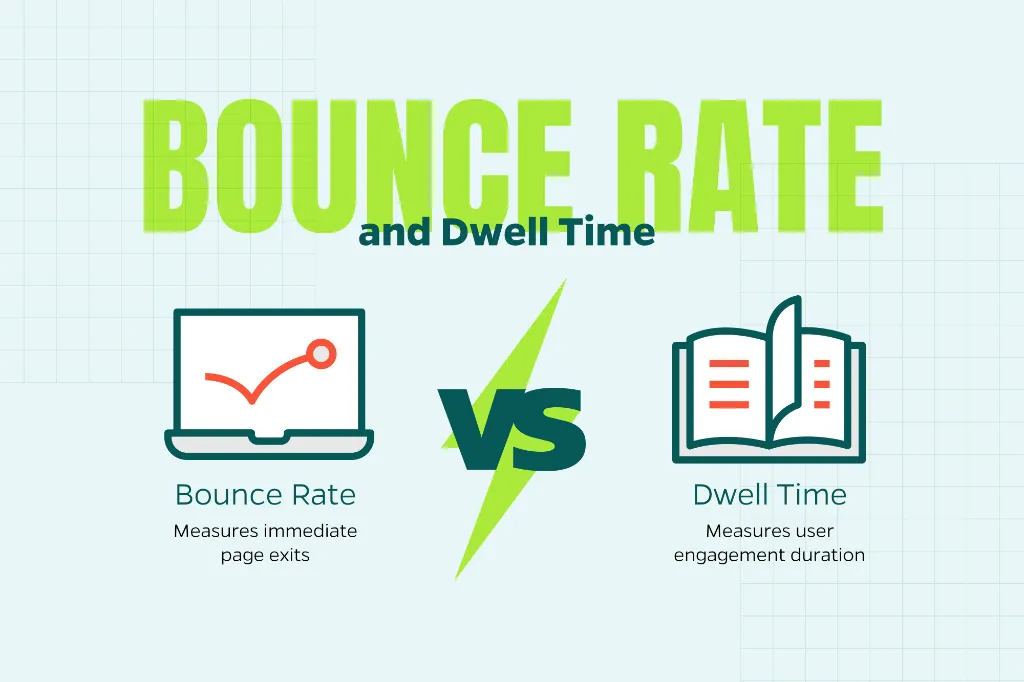
Bounce rate measures the percentage of visitors who land on a page and leave without clicking through to another page.
Dwell time is how long someone stays on your page before heading back to Google. It’s not explicitly shown in most analytics tools, but search engines pay attention. When users quickly return to the search results, it signals your page didn’t deliver.
Both metrics boil down to two questions: Did your page give visitors what they came for? And was it compelling enough to keep them around?
That’s where on-page SEO makes all the difference.
1. Match the Search Intent (Before You Do Anything Else)
Bounce rate problems start with a mismatch between what the visitor wanted and what they found.
Someone searching “how to calculate marketing ROI” probably isn’t ready to buy your services. They want a how-to guide or maybe a calculator. If they land on a sales page, they’re gone.
Before you write or optimize a page, look at what’s already ranking. Are they guides? Videos? Tools? Match that format and depth. Lead with value if the intent is informational. Make the path forward clear if it’s transactional. When your content aligns with search intent, people stick around.
2. Hook Them Fast — You’ve Got Seconds, Not Minutes
Your intro is make-or-break. If visitors can’t quickly tell they’re in the right place, they’ll bounce.
Skip the throat-clearing. Don’t open with “In today’s digital landscape…” Get to the point.
Try starting with a relatable problem, a compelling stat, or by telling readers exactly what they’ll learn. Pair that with clear subheadings and short paragraphs. If you do these things, you will already be ahead of most pages.
3. Make It Scannable
Most visitors are scanning, not reading. If your content looks like a wall of text, readers will leave.
Structure matters. Keep paragraphs short. Use subheadings that describe what’s in each section. Bullet points and numbered lists make key info easy to grab. When people can skim and still get value, they’re more likely to slow down and read deeper.
4. Use Internal Links Strategically
Internal links are one of the easiest ways to reduce bounce rate, yet so many sites underuse them. Done right, they point visitors toward related content they want, keep people exploring your site, and help search engines understand your structure.
The key: the links need to feel natural and valuable. Use descriptive anchor text that tells people exactly why they’d want to click. Instead of “click here,” try “download our lead generation checklist” or “see how we approach technical audits.”
5. Speed Matters More Than You Think
A slow page will kill your dwell time before anyone even sees your content. If your site takes more than a couple of seconds to load — especially on mobile — people are gone. Quick wins include compressing images, using modern formats like WebP, cutting unnecessary scripts, and ensuring your site works seamlessly on mobile.
Mobile optimization deserves extra attention. Most searches happen on phones now, and if your mobile experience is clunky, expect high bounce rates.
6. Add Visuals That Actually Add Value
Images, videos, and infographics can boost engagement — but only when they’re relevant.
Do you have stock photos that don’t add anything? Skip them. A well-placed video that explains a complex concept, or a chart visualizing key data can significantly increase dwell time. Just don’t let multimedia slow down your page. Optimize file sizes and use lazy loading if needed.
7. Give People a Next Step
Here’s a scenario we see constantly: someone reads a helpful post, gets to the end… and then bounces. Why? They didn’t know what to do next. Even on informational content, you should guide people somewhere. That could be related articles, downloadable resources, case studies, or service pages.
8. Refresh Content That’s Losing Steam
Sometimes a page ranks well but engagement drops off. Often, the information is outdated. Content audits help you spot these pages. Once found, update stats and examples, add new sections addressing current questions, expand thin content, and incorporate FAQs based on what people are searching. Fresh content keeps visitors engaged.
9. Let Your Analytics Guide You
Your analytics can tell you exactly where people are losing interest. Look at scroll depth, exit points, time on page by traffic source, and device performance. If most users drop off at a specific section, that’s your clue. Maybe it’s too technical, too vague, or poorly formatted. Either way, you know where to focus.
Why This All Matters for SEO
Let’s be clear: bounce rate and dwell time aren’t direct ranking factors. Google doesn’t have a simple “if dwell time is high, rank higher” algorithm. But engagement signals do matter. When people consistently stay on your pages, explore more content, and don’t immediately bounce back to Google, it tells search engines your site satisfies user intent.
That alignment — between what people search, what they find, and what they need — is at the core of sustainable SEO. Unlike backlinks or domain authority, on-page enhancements are completely in your control.
The Bottom Line
When you match search intent, structure content for readability, speed up load times, and guide visitors with internal links and clear next steps, you create an experience people want to engage with. If your analytics are flashing warning signs, look at your pages first. The biggest opportunity isn’t bringing in more traffic. It’s making better use of the traffic you’re already getting.
Need help with this? Contact Straight North. We help companies improve SEO to drive conversions and increase revenue.