


If you’re part of a healthcare practice trying to improve patient acquisition and retention, tracking the right marketing analytics is essential. Focusing on too many metrics can obscure what’s truly driving growth. Not tracking the right ones will leave you in the dark on what works and what doesn’t.
In this article we’ll break down the most important marketing analytics every healthcare practice should track and why they matter.
1. Website Traffic and Source Attribution
Your website is often the first interaction a potential patient has with your practice. Understanding how people find your site is foundational. So, it’s important to monitor these key traffic sources:
- Organic search (Google and other search engines)
- Paid search (Google Ads, Bing Ads)
- Direct traffic (visitors typing your URL)
- Referral traffic (links from other websites)
- Social media
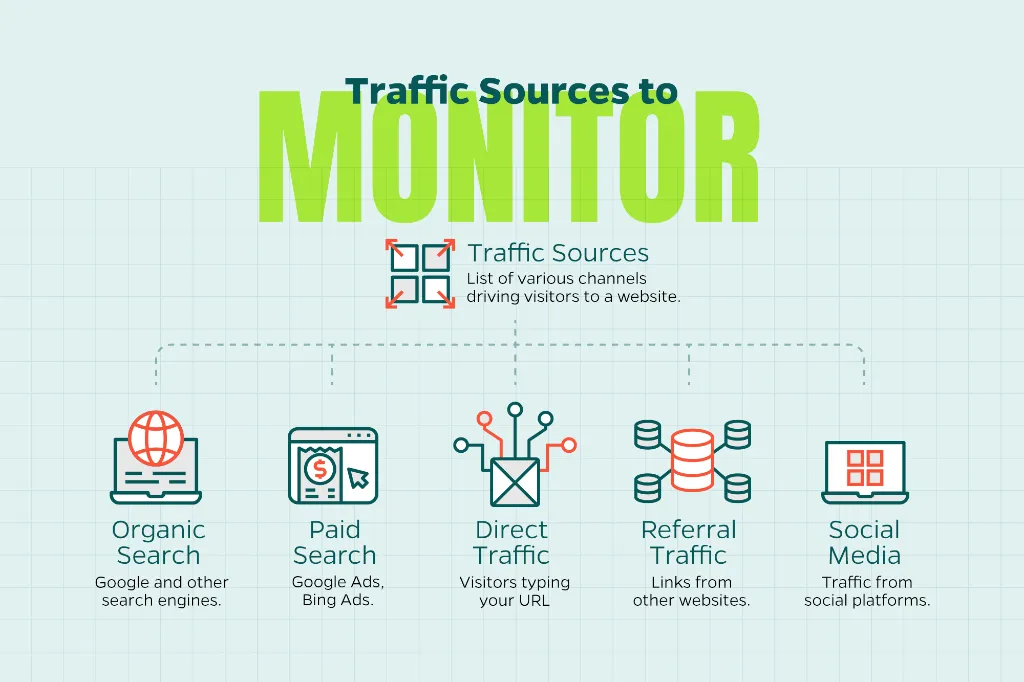
Why it matters: Traffic sources reveal which channels are working. If organic search drives most of your visitors, your SEO strategy is likely strong. If paid traffic dominates but conversions are low, your ad targeting or landing pages may need improvement.
Analyze trends over time. Are you growing month over month? Are certain campaigns driving spikes? Context matters as much as the numbers themselves.
2. Conversion Rate
Traffic alone doesn’t grow your practice. Conversions do. A conversion in healthcare marketing could be appointment requests, phone calls, form submissions, online bookings, or live chat interactions. Conversion rate is the percentage of visitors who take one of these actions.
Why it matters: A high conversion rate means your website is effectively turning visitors into potential patients. A low conversion rate suggests friction that is preventing prospects from taking the next step. That could suggest you have unclear messaging, poor user experience, or lack of trust signals. Fortunately, even small improvements in this area can lead to significant growth without increasing your ad spend.
3. Cost Per Lead (CPL)
Healthcare marketing budgets need to be efficient, especially in competitive markets. Cost per lead tells you how much you’re spending to generate a single inquiry. Below we will break down a formula to show you how to calculate CPL.
Formula: Total marketing spend ÷ number of leads = CPL
Why it matters: CPL helps you evaluate whether your campaigns are financially sustainable. If you’re spending $150 to acquire a lead but only a small percentage convert into actual patients, your ROI may be at risk.
Break CPL down by channel (paid search, social ads, display campaigns). This helps you identify where your budget is best allocated and where you might be overpaying for underperforming leads.
4. Patient Acquisition Cost (PAC)
While CPL focuses on leads, Patient Acquisition Cost goes a step further. This metric lets you know if the cost to acquire a new patient is too high so you can make necessary adjustments to your strategy and tactics.
Formula: Total marketing spend ÷ number of new patients = PAC
Why it matters: Not every lead becomes a patient. PAC gives you a clearer picture of actual business impact.
For example, Campaign A might have a low CPL but poor lead quality. Campaign B might have a higher CPL but convert more patients. PAC reveals which campaign truly delivers greater value.
5. Call Tracking Metrics
For many healthcare practices, phone calls remain a primary conversion point. Ignoring call data means missing a major piece of the puzzle.
Key call metrics to track:
- Number of calls
- Call duration
- Call source (which campaign or channel generated the call)
- Missed calls
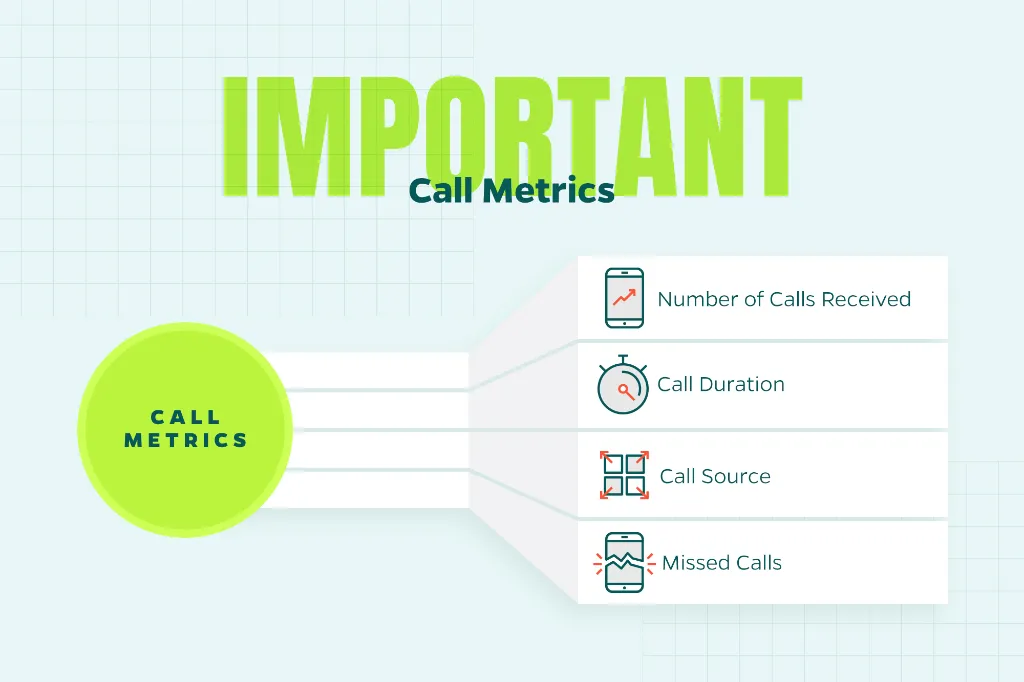
Why it matters: Call tracking connects offline interactions to online marketing efforts. If a large percentage of your calls come from paid search, that channel deserves continued investment and optimization.
Missed calls are especially important. Each missed call could represent a lost patient and lost revenue. If you’re seeing a high volume of missed calls, that’s a process issue that marketing data helps you uncover.
6. Appointment Booking Rate
Getting a lead is one thing. Turning that lead into a scheduled appointment is another.
What to measure: Leads ÷ booked appointments
Why it matters: This metric highlights how well your front desk or intake process performs. If leads are high but bookings are low, the issue could be slow response times, poor call handling, or complicated scheduling.
Improving this metric often requires collaboration between marketing and operations.
7. Patient Lifetime Value (LTV)
Not all patients are equal in terms of long-term value. Some may visit once, while others return for ongoing care or refer family members. Patient Lifetime Value estimates the total revenue a patient generates over the course of their relationship with your practice.
How to calculate it: Average revenue per visit × average number of visits per year × average patient retention in years
For example: $200 per visit × 3 visits per year × 5 years = $3,000 LTV
Why it matters: Understanding LTV allows for smarter budgeting and long-term planning. If your average LTV is $3,000, spending $300 to acquire a patient is reasonable. It also highlights the importance of patient retention, which is often more cost-effective than acquisition.
8. Search Engine Rankings and Visibility
A search engine optimization (SEO) strategy is critical for healthcare practices. Patients frequently search for providers using terms like “urgent care near me” or “dermatologist in [city].”
Key SEO metrics include keyword rankings, organic impressions, click-through rates (CTR), and local map pack visibility.
Why it matters: Higher visibility leads to more traffic and more potential patients. Tracking rankings helps you understand whether your SEO efforts are improving your online presence or if you’re losing ground to competitors.
Focus on high-intent keywords that signal someone is ready to book. “Back pain specialist Dallas” is more valuable than “what causes back pain.”
9. Online Reviews and Reputation Metrics
In healthcare, trust is everything. Online reviews heavily influence patient decisions. For reviews, the metrics you want to monitor include total number of reviews, average star rating, review frequency, and response rate to reviews.
Why it matters: A strong reputation can significantly improve conversion rates. Patients are more likely to choose a provider with consistent, positive feedback.
How you respond to reviews matters too. Timely, professional responses demonstrate attentiveness and care. Even a thoughtful response to a negative review can build trust with prospective patients.
10. Paid Advertising Performance
If you’re investing in paid media, detailed performance tracking is essential. Key metrics include click-through rate (CTR), cost per click (CPC), conversion rate, and return on ad spend (ROAS).
Why it matters: Paid campaigns can quickly become expensive if not properly optimized. Monitoring these metrics ensures your ads are reaching the right audience and generating meaningful results.
Look beyond clicks. A high CTR with a low conversion rate means your ad is attracting the wrong people or your landing page isn’t delivering on the ad’s promise.
Bringing It All Together
Tracking these metrics individually is valuable, but the real power comes from connecting them.
For example:
- Traffic + conversion rate = leads
- Leads + booking rate = appointments
- Appointments + retention = long-term revenue
When viewed as a system, your marketing data tells a clear story about what’s working and what isn’t.
It’s also important to align marketing metrics with operational performance. Marketing can generate demand, but the patient experience ultimately determines outcomes. A collaborative approach between marketing and operations teams produces the best results.
Common Pitfalls to Avoid
As you build your analytics strategy, watch out for these common mistakes:
Focusing on vanity metrics: High traffic or social media likes mean little without conversions.
Ignoring data accuracy: Poor tracking setup leads to misleading insights.
Siloed data: Marketing, front desk, and clinical data should work together.
Overcomplicating reporting: Stick to metrics that directly impact growth. Simplicity often outperforms complexity.
Ready to Turn Data into Growth?
Straight North helps healthcare organizations turn marketing analytics into measurable results. Our team can help you make sense of your data and use it to grow your practice.
Contact Straight North today to learn how we can help you build a smarter, more effective healthcare marketing strategy.