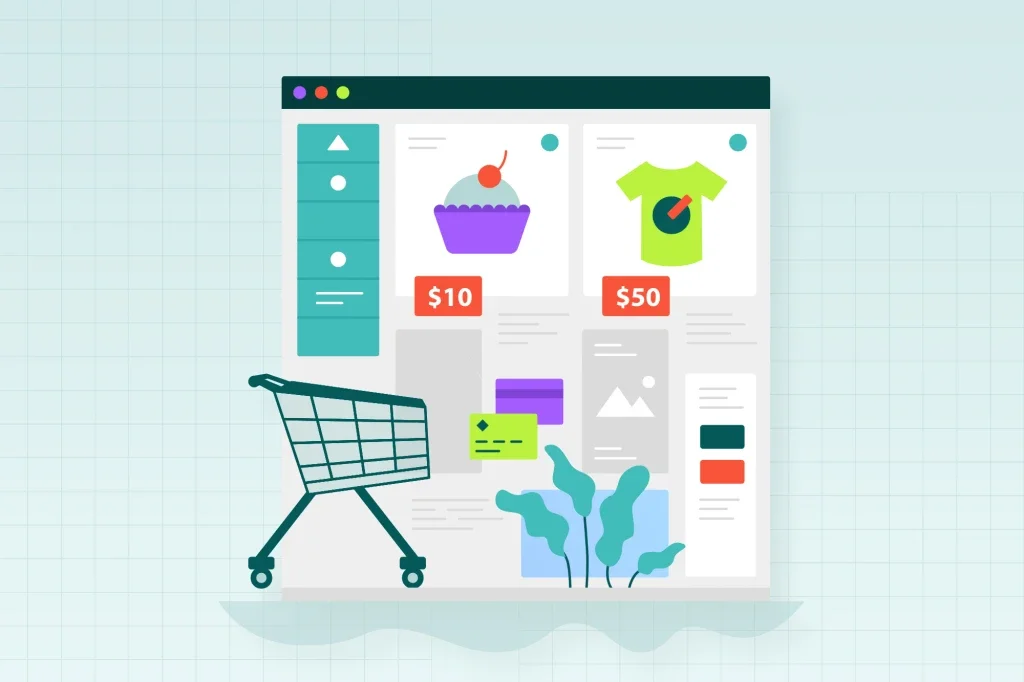


Think of your website like a digital storefront. Hundreds of shoppers pass by every day: awareness. Some stop to look at a product and maybe add it to their cart: interest. But by the time checkout arrives, only a fraction follows through: action.
The conversion funnel tracks that entire journey. Understanding where people drop off, and why, is key to improving performance. SEO Analytics Expert Marc Holt explains how AI and GA4 uncover those hidden friction points, helping more visitors make it to “order confirmed.”
What’s AI’s Role in Conversion Funnel Analysis?
Predicting human behavior is a difficult task, particularly when people’s moods shift day to day. You can try to guess why someone went through with a purchase or abandoned their cart, or even why they got to the site and left immediately. Rather than trying understand the human brain, you can use automation and AI to identify subtle patterns and predict future behavior.
Example: Let’s say you notice a spike in traffic to your pricing page but fewer conversions than expected. AI can uncover factors like slower load times or unclear copy that humans might overlook.
AI can quickly find patterns and problems that are easy to miss when you look at data alone. It helps you see not just what’s happening, but why it’s happening. This saves you time and helps you make smarter changes that boost results.
AI doesn’t replace human insight; it amplifies it by turning raw data into actionable understanding.
Core Stages of the Conversion Funnel
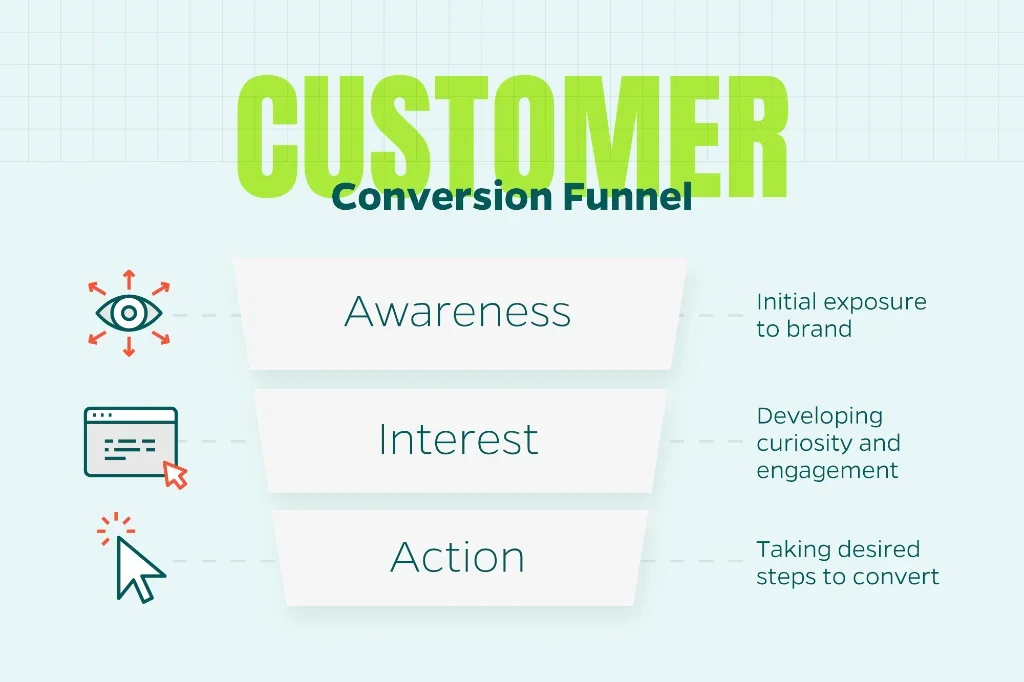
Each stage of the conversion funnel guides website visitors closer to becoming customers.
Awareness
You’ve launched a new product and want to get it noticed. To build awareness, you run targeted advertising campaigns, optimize keywords, and generate PR buzz highlighting the product’s best features. These efforts attract potential customers to your website to learn more.
Interest
Once on your site, visitors begin exploring. They read your product descriptions, browse related pages, and seek out additional information to understand how your product fits their needs.
Action
Finally, some of these engaged visitors take the next step and make a purchase. This conversion marks the completion of the funnel and the start of a new customer relationship.
“Not everyone who visits your site is ready to buy. Some people are just looking for information or comparing options. That’s why a few drop off at each step. It’s part of the normal customer journey.”
You can expect some drop-offs along the way. Maybe your ads sparked interest, and someone just wanted to see who you were. Or they read a bit more and decided to do more research. Then there are the people who make it all the way to the purchase page and realize they aren’t ready to finish the transaction. Whatever the case, you start gaining additional insights into areas you can improve and those that work well. But where do you find this data?
Use GA4 to Analyze Funnel Data
GA4 decodes what’s happening behind the scenes to help you update your website to keep potential customers interested and guide them closer to a purchase.
The Landing Page Report shows you where visitors first enter your site. It answers the question: Which pages are attracting the most people?
The Exit/Bounce Rate Report identifies pages where people leave. Use this as a signal of problem points on your site.
Ask yourself:
- Do you need a stronger CTA?
- Can you simplify your page layout or messaging?
- Is your content aligned with visitor intent?
Example: If 60% of visitors exit after your pricing page, test adding a short explainer video or clearer “Get Started” button to reduce hesitation.
GA4 helps you move beyond what’s happening to why it’s happening.
AI and Funnel Insights: Applying ChatGPT to Spot Problems
In ChatGPT, enter prompt: “Here’s my GA4 data. Find pages with high traffic, but low conversions.”
ChatGPT will pinpoint pages that attract visitors but fail to convert. Use this information to improve your funnel. It highlights the pages where you are losing people.
Blog Is Getting Traction, but No One Is Signing Up
Part of the product promotion is the informational blog you created to draw more people in. The good news: it’s attracting attention. The bad news: visitors stop there. Marc explains what could be happening, and how to fix it.
That means the interest or action stage needs help. People are reading your content, but they aren’t taking the next step. You may need a stronger call to action or clearer message to guide them forward.
Getting AI Ideas to Fix Your Funnel
Now that you know what’s causing issues, you need help fixing them. This is where ChatGPT becomes your problem-solving partner. Ask it for creative, data-driven solutions tailored to your page’s needs.
For example, prompt it with:
“Give me call-to-action (CTA) ideas for a service page that’s getting clicks but few conversions.”
Ask for More Out of Your ChatGPT Prompt
To get the best results, share as much context as possible:
- Page goal: What do you want visitors to do? (e.g., fill out a form, call, download a guide)
- Target audience: Who is the page speaking to? (e.g., small business owners, B2B decision-makers, homeowners)
- Current issues: What’s not working? (e.g., low engagement, confusing layout, vague copy)
ChatGPT can then suggest:
- Fresh CTA phrasing: (e.g., “Get My Free Estimate” instead of “Contact Us”)
- Design or placement improvements: Move the CTA above the fold, add urgency or social proof.
- Content restructuring ideas: Add a short testimonial before the CTA or simplify the copy leading up to it.
Before: “Contact Us”
After: “Get Your Custom Quote in 2 Minutes”
Small shifts like this add urgency and specificity, which are two proven conversion boosters.
Use AI not just to diagnose problems, but to brainstorm creative, testable solutions.
How Do You Test and Improve With AI Insights?
Every time you put a query into ChatGPT, you are going to get different sources of information and responses. Similarly, every website audience is unique. That’s why testing is essential.
Every audience is different, so you won’t know what works until you test it. Testing shows you which ideas actually improve results. It keeps your decisions based on data, not just guesses.
Example: Test two CTA versions: Version A “Book a Free Consultation” vs. Version B “Get Expert Advice Today”
After two weeks, check GA4 to see which one converts better. Did your update make a difference? Recheck analytics to compare the old results to the new. You can always ask ChatGPT more questions to guide you to further improvements for your funnel.
Demonstrating SEO Value Through Funnel Tracking
Quick SEO win: Add or update a clear, short CTA on a top-performing page. Small changes can encourage more visitors to take the next step in the customer journey.
Example: A client’s blog traffic jumped 40%, but conversions stayed flat. By tracking funnel stages, you discovered the CTA was buried mid-page. After moving it higher and clarifying the offer, lead submissions rose by 22%.
Tracking funnel stages shows how SEO traffic turns into tangible results like leads or sales. It also makes it easier to demonstrate ROI to clients or internal teams.
“When you track each stage, you can see where your SEO brings in the most value. This makes it easier to show clients or teams how your work is paying off.”
When SEO and funnel tracking work together, visibility transforms into measurable business success.
Key Takeaways
- Think of your funnel like a journey: It’s how people go from discovering your brand to becoming customers.
- Let your data guide you: GA4 shows where visitors get excited, and where they lose interest.
- Bring in a little AI magic: Tools like ChatGPT can help you spot what’s not working and spark new ideas to fix it.
- Start small: Even tiny updates, like a better call to action, can move the needle in a big way.
- Keep testing and learning: Track your changes, celebrate the wins, and keep improving as you go.
Remember, every small insight gets you closer to turning curious visitors into loyal customers.