


Our partner contributions come from a vetted network of trusted agencies, each bringing expertise across digital marketing. Their insights provide added value and support for our prospects and clients.
User-generated content is effective because it feels authentic.
That’s what makes it powerful, and that’s what usually gets lost when brands try to scale it.
If you make it polished, it starts sounding like brand content, and that’s when people tend to tune out.
Over 90% of consumers say authenticity heavily influences which brands they choose to support. When your UGC starts feeling scripted, you lose likes and trust.
This article breaks down how to scale UGC campaigns without flattening the content’s voice and killing authenticity.
What Is UGC?
User-generated content is any post, video, image, or review created by your audience, not by your team.
It could come from customers, content creators, or everyday users. What matters is the perspective: it feels like someone sharing their experience, not a brand pushing a product.
And people trust it a lot.
- 92% of consumers trust UGC and word-of-mouth more than traditional ads.
- As Search Logistics also stated, 79% say UGC heavily influences their purchase decisions, being 6.6x more influential than branded content and 8.7x more than influencer content.
This trust is what drives better engagement, lower CPCs, and stronger conversion rates. But it only works if it stays authentic.
Why Authenticity Breaks When You Scale
Scaling UGC looks easy at first: just add more creators, more posts, and more formats.
But here’s where things start to fall apart:
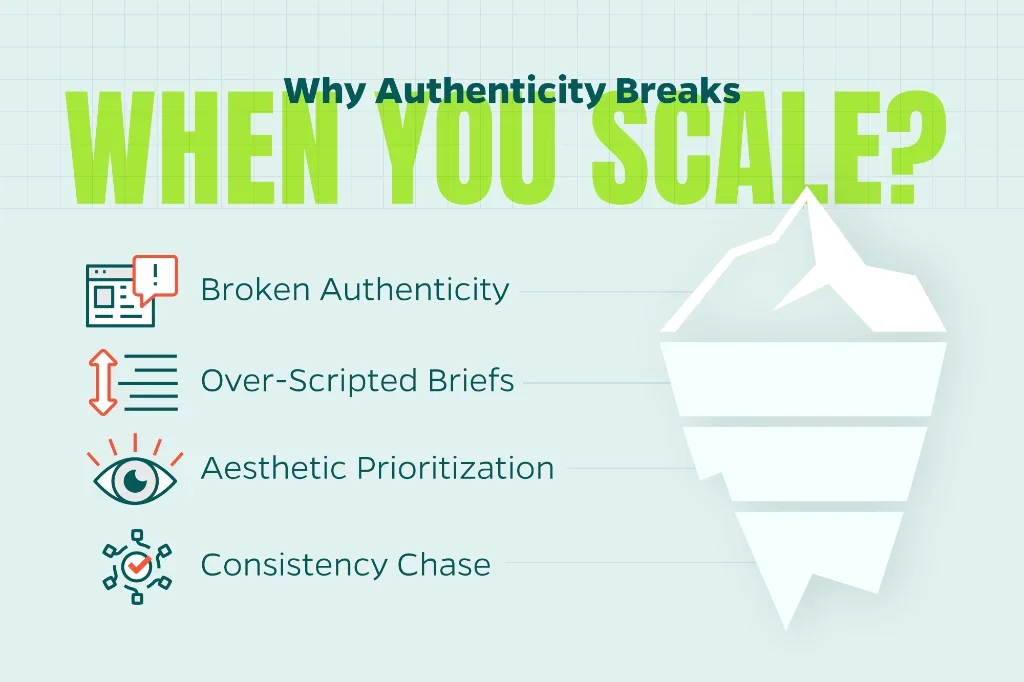
- You over-script briefs.
- You prioritize aesthetics over real voices.
- You chase consistency, and end up with copy-paste content.
Authenticity turns into performance theater, and your audience notices.
For example, shoppers are 2.5x more likely to say UGC feels more authentic than brand-created content. But only if it looks and sounds like something real people would actually post.
Key Pillars to Scale UGC Without Losing the Human Element
Scaling UGC doesn’t mean giving up control, but it does mean giving up some control.
These five areas are where you can scale smart, while protecting what makes UGC effective.
Let’s break down:
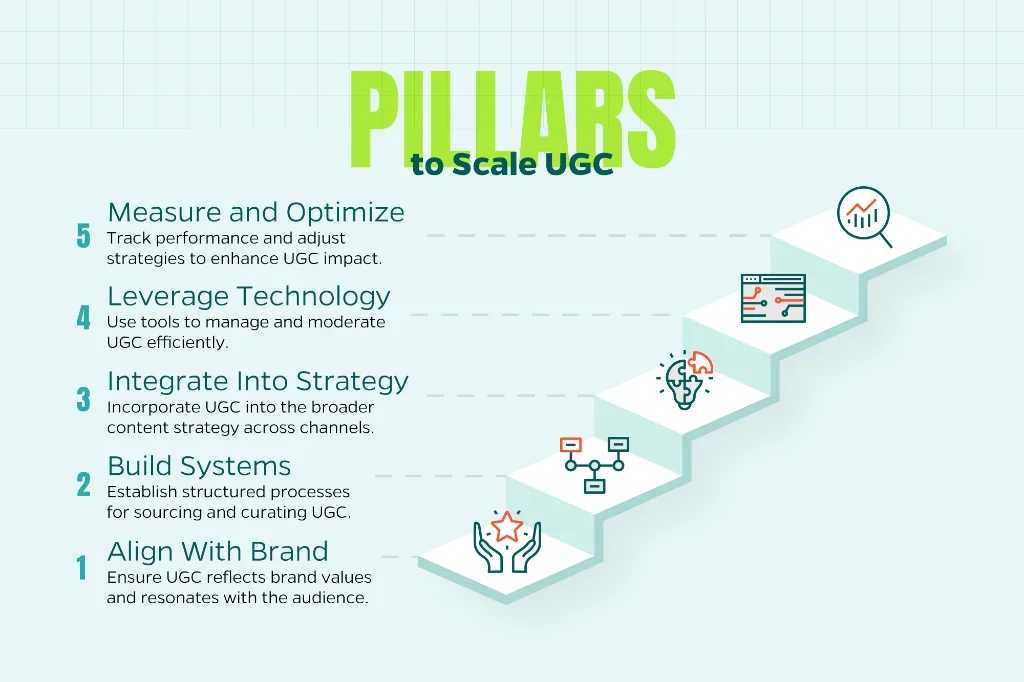
1. Align UGC With Brand Purpose and Audience
Start with clarity. What does “authentic” mean for your audience?
For some brands, it’s raw, unfiltered content. For others, it’s creators showing real use cases, cultural details, or everyday moments that matter to their community.
You need to define:
- What your campaign is trying to say.
- Who should be saying it.
- How does that tie into your brand values.
Let creators translate those values in their own voice. Don’t hand them a script, hand the direction.
The best UGC reflects your brand through someone else’s story. And it works, because content that feels personal drives stronger engagement and trust.
2. Build Systems for Sourcing and Curation
You don’t scale UGC with ad hoc outreach and a branded hashtag.
You scale it with structure.
Here’s how:
- Use branded or campaign hashtags to collect content.
- Invite creators through platforms or ambassador programs.
- Set up internal workflows to review, tag, and repurpose assets.
- Create briefs with room for creativity, not just bullet-point instructions.
Also, involve local or community teams. They bring in the cultural nuances that centralized teams usually miss.
And don’t over-edit. UGC performs better because it feels real; keep that in mind during curation.
Slightly imperfect content often resonates more than content that feels rehearsed.
3. Integrate UGC Into Your Content System
UGC needs to be part of the bigger content strategy.
To scale it without losing authenticity, you need to connect it with your full content strategy, not treat it like a bonus.
Start by mapping UGC across the funnel:
- Top of funnel: Creator videos or community shoutouts that drive awareness.
- Mid-funnel: Reviews, unboxing, and “how I use it” posts that support consideration.
- Bottom-funnel: Testimonials or before-and-after content that reinforces conversion.
This prevents UGC from feeling disconnected. Each piece has a purpose and a place in the content flow.
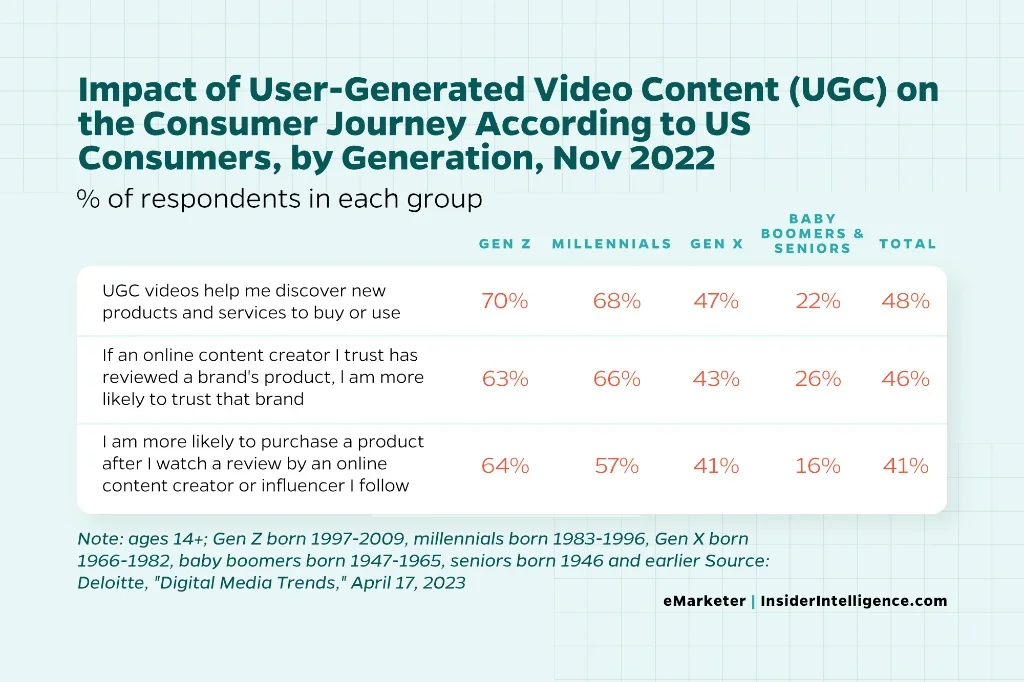
That’s backed by behavior: 70% of Gen Z and 68% of millennials say UGC videos help them discover new products and services.
And it works across channels:
- Social media posts
- Paid ads
- Product pages
- Email flows
- Offline displays (events, packaging inserts)
- Websites
When UGC is integrated across these touchpoints, the impact compounds. For example, sites that do this see a 20% increase in return visitors.
If you want to scale and stay consistent, use modular templates. Think flexible design systems that keep branding in check, but let the content keep its original tone.
4. Leverage Technology and Moderation to Scale Without Losing Control
Trying to scale UGC without tech support creates unnecessary friction.
Here’s the stack you want to build:
- UGC platforms to collect, organize, and manage content.
- Rights management tools to handle permissions and usage.
- CMS or DAM systems to store, tag, and repurpose assets
- Automation for basic sorting and metadata, but keep human review in the loop.
Moderation is key to protecting your brand and your creators.
That means:
- Clear consent processes.
- Fast response to problematic content.
- Regional filters if you’re running multi-market campaigns.
Creators also need to feel protected. If you’re sourcing at scale, you’ll need clear guidelines and fair usage terms up front.
This matters more than ever, especially with AI-generated content blending into social feeds.
Recent studies demonstrate that most users couldn’t reliably tell apart human and AI-created posts. And while AI has its place, people still value authenticity. It’s what makes UGC feel trustworthy.
5. Measure, Optimize, and Adjust Without Flattening the Voice
Tracking the usual performance metrics is important, but not enough on its own.
UGC also shapes how people see your brand. That means you need to monitor more than clicks.
Focus on:
- Engagement (comments, shares, watch time).
- Conversions from UGC-based content, especially in paid.
- Sentiment (what people say, how they react, tone of mentions).
- Perception shifts over time (via surveys, NPS, social listening).
Set these up early, and you’ll quickly see which creators feel genuine and also what types of content resonate.
If everything starts looking the same or engagement stalls, it’s time to rework your content.
As Amra & Elma also mentioned, UGC on TikTok has proven to be 22% more effective than traditional brand content, because it blends naturally with the feed, not because it’s louder or slicker.
TikTok UGC Marketing Tips: Scale Authentic Content That Converts
When to Bring in an Agency
Internal teams can only go so far before scale becomes a barrier.
When sourcing, managing, clearing rights, and publishing at volume becomes too time-consuming (or too messy), it’s worth calling in outside support.
What a strong UGC agency brings:
- Creator access at scale without sacrificing fit or voice.
- Workflow systems are already built for high-volume content.
- Rights management and compliance built in.
- An outside perspective to flag weak content before it hits publish.
If you’re still testing or iterating slowly, you can probably keep it in-house.
But once your team is juggling multiple markets, formats, or paid campaigns fueled by UGC, an agency speeds everything up and keeps things consistent.
For example, inBeat focuses on this exact model: combining UGC with influencer strategy, working with the top 2% of creators, and delivering platform-ready content that performs without losing authenticity.
Let Your Audience Keep Seeing Themselves in Your Brand
Scaling user-generated content isn’t the hard part.
Keeping it honest, consistent, and actually relatable is the real challenge.
The content only works if people still trust it. And that trust comes from staying close to what makes UGC effective in the first place: real voices, real stories, and content that feels natural in the feed.
Strong systems help. So do smart briefs and clear creative direction. But if the result doesn’t feel like it came from a real person, it won’t land.
Keep your UGC content real. That’s what people connect with, and that’s what keeps them coming back.
FAQs
How to Run a Successful UGC Campaign?
Start with clear campaign goals. Use the right social media platforms, work with brand ambassadors who understand your voice, and focus on content creation that supports both awareness and conversion.
How Can Brands Maintain Authenticity and Quality While Scaling UGC Efforts?
Define creative boundaries early. Let social media managers guide creators without over-polishing. Focus on native-feeling content that reflects real users, not staged moments.
What Type of UGC Works Best If We Want More Sales, Not Just Likes?
Short-form videos and testimonials work best on most social media channels. They build social proof fast and support content marketing efforts at the bottom of the funnel.
How Do We Stop Our UGC From Feeling Repetitive When a Certain Style of Content Performs Well?
Rotate content formats and creator voices. Prioritize content diversity and test new angles. Even small changes help maintain brand recognition without losing relevance.
Who Should Own UGC in the Company: The Social Team, The Performance Team, or Both?
Both. Social leads sourcing and engagement; performance optimizes for conversions. Together, they create a content operating system that keeps campaigns on track and aligned with your broader marketing campaign.
Is Influencer Marketing Still Relevant If We Focus on UGC?
Yes, but they play different roles. Influencer marketing helps with reach and credibility. UGC adds authentic content that strengthens brand loyalty and social proof across touchpoints.
How Do We Measure the Impact of UGC Beyond Likes and Shares?
Track deeper campaign metrics: engagement rate, conversions, sentiment, and return visitors. Focus on how UGC influences brand awareness and builds long-term trust.