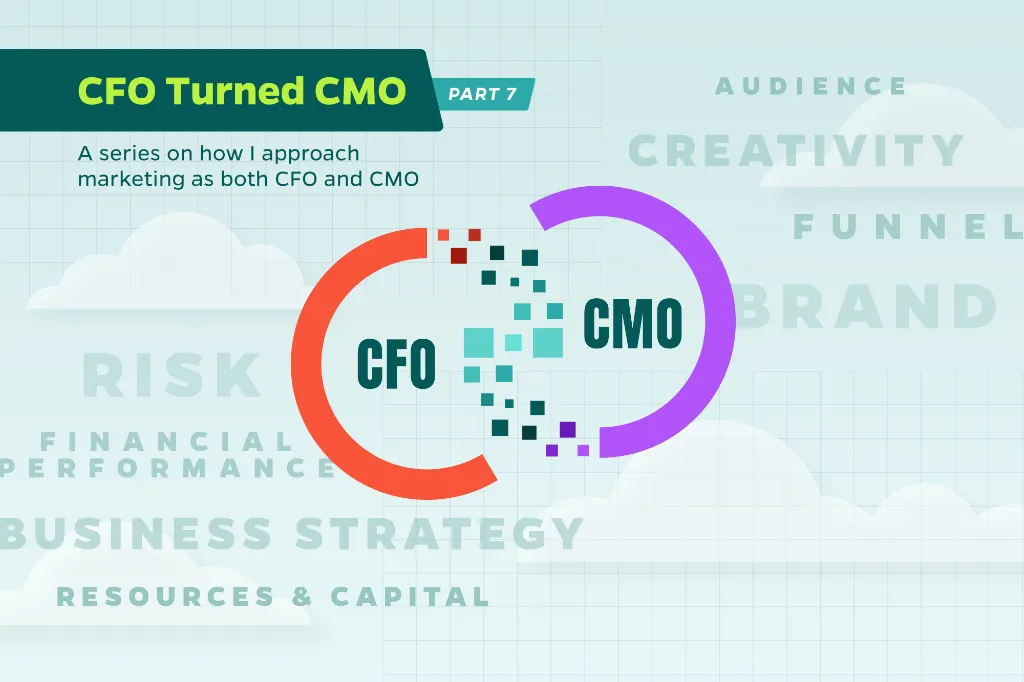



This article is part of CFO Turned CMO, a series on what I’ve learned from leading both finance and marketing. It explores how my finance background has shaped the way I approach marketing, and how that perspective can help other business leaders.
If you want marketing to make better decisions, give marketing more business context.
Not just the product or service. Not just the customer. Not just the brand voice.
Give marketing more context about the goals of the business, the economics of the business, the constraints of the business, and what the business is ultimately trying to achieve.
In my experience, that is one of the fastest ways to improve marketing effectiveness.
It also becomes much easier for marketing, finance, and executive leadership to speak the same language.
My background in finance shaped how I think about business goals, margins, payback, capacity, and risk. Leading marketing added a different kind of responsibility. It forced me to think not just about what looks efficient on paper, but how decisions play out in the market, across channels, and throughout a real buyer journey.
One of the clearest lessons I’ve learned from carrying both responsibilities is that marketing improves when more of the team has greater context about the business.
Quick disclaimer: I am not suggesting that every company should disclose every financial detail to every employee. That is not realistic, and in some cases it is not appropriate. But I do think many businesses can share more than they do. And just as important, finance and leadership should not only share the numbers. They should explain what those numbers mean.
What I Mean by “Business Context”
Marketing already spends a lot of time trying to understand the buyer. That is necessary.
But marketing gets much stronger when it also has more context about the business underneath what it is promoting.
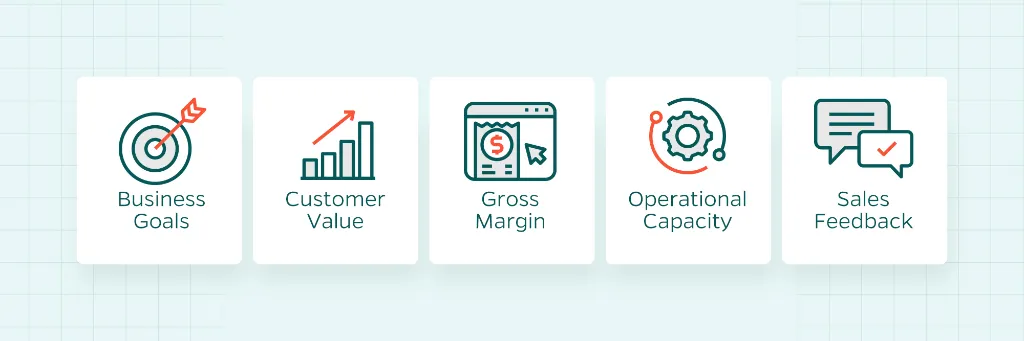
That can include things like:
- The current goal of the business and the time horizon
- Average customer value, and how much it varies
- Retention or repurchase behavior
- Gross margin overall and by service or product
- Operational capacity and bottlenecks
- What kinds of growth the business can absorb well
- What sales is hearing in the market
This is not about turning marketers into accountants. It is about helping them make decisions with a fuller picture of what the business is trying to do and what the business can support.
Context matters at the leadership level, but it should not stop there. When more of the team has it, you see better decisions throughout the organization.
The person writing the content makes better choices. The person building a landing page makes better choices. The person deciding what proof to feature, what service to emphasize, what audience to prioritize, or what offer deserves more support makes better choices
That is when things start to come together.
Why This Improves More than Strategy
The long-term strategic benefit is obvious. When marketing has more business context, it is easier to stay aligned over time. Priorities become clearer. The team is less likely to chase whatever looks good in isolation. Long-term strategies are easier to build and easier to stick with.
But I think the bigger point is that this context improves the smallest decisions too.
For example, our paid team adjusts Performance Max campaigns every day, including which search themes to prioritize. If they looked only at immediate campaign performance, they might naturally lean toward a lower-value service that is generating more short-term volume. But when they have more business context, the decision changes. In our case, SEO clients tend to have a higher monthly investment and stay with us longer, and certain client industries are even more valuable than others. That gives the team a better way to make real-time decisions on their own. They are not just optimizing for what is performing today. They are optimizing for the kind of business we most want to win.
That is part of what makes this so important. It is not just strategic context. It is decision-making context.
It affects how a page is framed. It affects which services get emphasized. It affects what kind of lead is considered valuable. It affects how aggressively a campaign should be scaled. It affects whether a short-term performance signal should actually change the plan.
And when more of the team has that context, decisions become less reactive and more coherent because they are being shaped by the same underlying business reality.
Many Marketing Problems are Really Context Problems
Marketing operates in an environment where signals are noisy. Conversion rates move. Competitors change messaging. Buyer behavior changes. Attribution is often incomplete.
In that environment, teams naturally pay close attention to what they can see most clearly: leads, clicks, impressions, cost per lead, content output, channel movement.
Those metrics can absolutely be useful. But on their own, they do not tell the full story.
They do not tell you whether the leads are the right leads. They do not tell you whether the business can support more volume. They do not tell you whether a product or service is healthy to scale. They do not tell you whether the business would be better served by improving conversion, improving trust, or improving service mix instead of simply generating more activity.
That is why so many issues that look like marketing issues are really context issues.
When marketing has more context, it becomes easier to ask better questions:
- Is this the kind of customer we want more of?
- Does this fit the goal of the business right now?
- Is this worth scaling given margin and capacity?
- Is this creating the kind of growth the business actually wants?
Those are better questions than simply asking whether a metric moved up or down this week.
What Finance and Leadership Should Communicate
This is where finance and executive leadership play a big role.
The job is not just to share metrics. The job is to explain what those metrics mean for decisions.
A margin number by itself is useful. A margin number is much more useful when you understand what is driving it. The same is true for retention, customer value, service mix, payback expectations, and capacity.
For example, it is one thing to say a service has lower margins. It is another to explain that it also creates more delivery strain, takes longer to onboard, or tends to produce less valuable long-term relationships. That changes how marketing should think about emphasis, targeting, and scale.
That is the kind of context that improves both strategic planning and execution.
Again, some details may need to stay private. That is fine. Full transparency is not always possible.
But in my experience, more context is usually better than less. And when you do share it, explain the implication. Explain what the number changes. Explain why it matters.
That is when the information becomes useful.
Final Thoughts
One of the fastest ways to improve marketing is to give marketing more business context.
Not vaguely. Not only at the top. And not just by sharing numbers without explanation.
The more broadly a marketing team understands the goals, economics, constraints, and realities of the business, the better its strategy gets, the better its day-to-day decisions get, and the easier it becomes for the team to stay aligned with financial leaders and executives.
That kind of alignment does not just make marketing better. It leads to better decisions across the business.
In the next post, I’ll go deeper on one of the most common questions that comes up once marketing and finance are working from the same reality: what are you actually willing to invest for a customer, and how does that change as you scale?