



SEO for professional services firms combines familiar search tactics with something more demanding: proof that a firm deserves a client’s trust. Prospects cannot fully evaluate legal advice, tax planning, investment guidance, or architectural design before buying. Strong search visibility therefore depends on specific services, qualified experts, credible reviews, and evidence that other people recognize the firm’s work.
The practical priorities are straightforward: make each service easy to find; show who provides and reviews advice; keep business information consistent; earn credible third-party recognition; and measure consultations, not merely clicks.
Why SEO Works Differently for Professional Services Firms
Professional services SEO is different because clients are purchasing judgment rather than a product they can inspect. A prospective client may understand the problem but not know how to evaluate a lawyer’s strategy, an accountant’s analysis, or an architect’s design process. Credentials, relevant experience, testimonials, detailed examples, and recommendations become useful signals of confidence.
The stakes can also be unusually high. Legal, financial, and other consequential advice may affect someone’s livelihood or security. A vague marketing claim is less helpful than a page that explains the service, identifies the professional responsible, and supports important assertions with reputable sources.
Search volume alone is a poor way to value professional services lead generation. A narrowly worded query about a specialized engagement may bring only a handful of visitors but produce a long-term client relationship. Firms should prioritize the right prospective clients and the questions they ask before choosing an adviser. For a broader view of channels, see Straight North’s professional services digital marketing agency page.
Referred Clients Search You Before They Call
Referral-driven firms still need SEO because a recommendation often starts, rather than ends, a prospect’s research. Someone referred to a partner may search that person’s name, inspect the firm’s practice pages, compare review profiles, and ask an AI assistant to explain the differences among nearby firms.
“Professional service firms need to create content that doesn’t just “tell”, but “shows” why they should be trusted,” says Bryan Paravola, Straight North Senior SEO & GEO Strategist.
“Professional service firms need to create content that doesn’t just “tell”, but “shows” why they should be trusted.”

That distinction is critical for branded search. A firm that describes itself as experienced but offers no examples, biographies, service details, or independent recognition leaves the referral unconfirmed. Start by checking what appears for the firm’s name, key partners, and core services. Repair outdated listings, incomplete bios, and missing pages before chasing every broad industry keyword.
In Straight North’s September 2026 survey of 101 marketers, 73% reported that a customer or prospect had told them they used ChatGPT or another AI platform to discover or research their company during the preceding 12 months. This measures what marketers heard from buyers, not the share of all buyers using AI.
The immediate objective is simple: when a prospect looks you up, the available information should corroborate the referral and make the next step easy.
The SEO Basics Every Firm Needs
A sound SEO program for a professional services firm connects search intent with a clear service offering, a usable website, and trustworthy evidence. Each important service deserves its own page, with separate audience or industry pages when the needs genuinely differ. A catchall “Services” page rarely answers enough of the questions a serious buyer has.
Workstream | What It Means for a Firm | Common Gap |
Service and practice pages | Describe the problem, process, deliverables, audience, and next step. | Broad lists without useful details. |
Local SEO and Google Business Profile | Maintain accurate office information, categories, and eligible staffed locations. | Inconsistent listings or thin location pages. |
Expert content | Answer questions professionals hear in consultations; show examples and sources. | Generic articles with no expert input. |
Technical SEO and usability | Make pages fast, indexable, accessible, navigable, and easy to contact. | Broken forms, slow pages, or confusing navigation. |
Links and mentions | Earn references from professional associations, publications, and partners. | Low-quality links without relevant reputation. |
“Likewise, it’s important to give examples and specific details about common questions, problems you can help solve, and real-world applications of your services,” says Bryan Paravola, Straight North Senior SEO & GEO Strategist.
“Likewise, it’s important to give examples and specific details about common questions, problems you can help solve, and real-world applications of your services.”
Useful content turns a service page into a decision aid. Explain who the service fits, what an engagement involves, and what information the client should prepare. Examples should be factual, permissioned, and stripped of confidential details.
“I look at three things: how closely the firm matches the service someone needs, how close its office is to the searcher, and how established its reputation is online,” says Josephine Schramm, Straight North Senior SEO & GEO Strategist.
“I look at three things: how closely the firm matches the service someone needs, how close its office is to the searcher, and how established its reputation is online.”

Local SEO for professional services should reflect those three dimensions: service relevance, real office proximity, and reputation. Location pages should represent genuine staffed offices, not fabricated coverage areas.
“Even with strong search rankings, a website that provides a poor user experience can limit results,” says Christian Thomas, Straight North Senior SEO & GEO Strategist.
A qualified visitor must be able to identify the right practice, understand the next step, and complete a consultation request. Test mobile navigation and forms as carefully as keyword rankings. Structured data can clarify page information when implemented accurately.
In Straight North’s November 2026 professional services marketing survey of 101 respondents, 33 respondents (32.67%) said their organizations currently invest in creating or improving service pages.
In the same November 2026 survey, 18 of 101 respondents (17.82%) selected creating enough quality content as their organization’s biggest SEO challenge.
E-E-A-T and YMYL: Why Credentials Carry Extra Weight
E-E-A-T stands for experience, expertise, authoritativeness, and trustworthiness; YMYL means “Your Money or Your Life,” Google’s term for topics that can significantly affect health, financial stability, or safety. Google explains that trust is the most important E-E-A-T consideration and that strong evidence of these qualities matters especially on consequential topics. E-E-A-T is not one numerical ranking factor, and adding a biography does not automatically improve rankings.
Tax guidance, legal explanations, lending terms, and investment discussions can influence serious decisions. Readers need to know who prepared the material, whether the person is qualified, when the advice was reviewed, and what authoritative information supports it. Search engines can also use those visible signals when assessing the reliability of a page.
“In both industries, the strongest proof is content a generalist could not credibly produce: original analysis, firsthand observations, documented processes, relevant credentials and transparency,” says Bob Hand, Straight North Senior SEO & GEO Strategist.
“In both industries, the strongest proof is content a generalist could not credibly produce: original analysis, firsthand observations, documented processes, relevant credentials and transparency.”

For financial and legal firms in particular, this means explaining the reasoning behind advice without giving individualized counsel to unknown readers. Original analysis, documented methods, and firsthand observations distinguish the firm’s knowledge from interchangeable summaries. Expertise must remain accurate and within the boundaries of professional obligations.
In Straight North’s November 2026 survey of 101 professional services marketing respondents, 26 (25.74%) selected credentials and qualifications as information they believe is most important to prospective clients evaluating a firm online. These are respondents’ beliefs about clients, not answers collected directly from prospective clients.
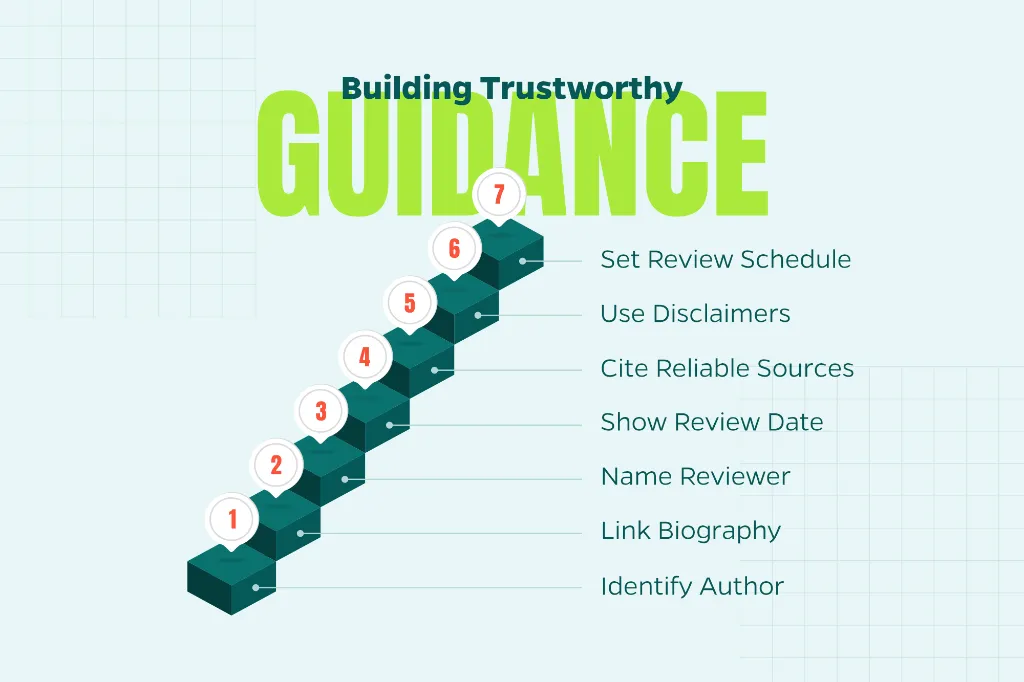
A practical editorial checklist helps make trust visible on every consequential page:
- Identify a named author and relevant credential, such as CPA, JD, CFP®, or AIA.
- Link to a substantive author biography and, where appropriate, public license or board records.
- Add a named professional reviewer for technical or high-stakes advice.
- Show a meaningful last-reviewed date and update changed guidance.
- Cite primary rules, professional standards, or other reliable sources.
- Use clear, approved disclaimers where needed.
- Set a recurring review schedule for pages affected by changing rules.
Compliance review should be designed into production rather than treated as a last-minute obstacle. Firms can define which claims need full review, maintain approved descriptions and disclaimers, and route sensitive material to their own compliance counsel. The firm’s compliance team has final sign-off. For more context, see https://www.straightnorth.com/blog/ymyl-in-seo-how-e-e-a-t-standards-shift-in-high-stakes-topics/.
Reviews and Reputation Within Your Profession’s Rules
Reviews give prospects an immediate view of a firm’s reputation in Google Maps, search results, and third-party directories. AI assistants may also summarize available reviews. A sparse profile, outdated feedback, or unanswered concerns can make an otherwise qualified firm harder to evaluate.
Professional services firms face two overlapping sets of requirements: platform review policies and their own professional advertising rules. Google prohibits incentivized reviews, discouraging negative reviews, and selectively requesting positive reviews. Lawyers, investment advisers, and accountants may have additional restrictions on testimonials, endorsements, confidentiality, or misleading claims.
A workable review process asks eligible clients at a consistent, natural milestone without screening for satisfaction. Responses should remain courteous and avoid confirming confidential client relationships or revealing private facts. Monitor major directories for inaccuracies, impersonation, and recurring concerns.
Do ask consistently, train staff on approved language, and have sensitive responses reviewed. Do not offer rewards for positive ratings, pressure clients to revise criticism, or publish testimonials without checking applicable rules and disclosures.
For investment advisers, the SEC Marketing Rule governs testimonials and endorsements under specified conditions; lawyers should check the rules of their state bar; and accounting firms should consider applicable AICPA professional-conduct requirements. These are general considerations, not a compliance determination. This is not legal advice; check your state’s rules and obtain your firm’s own compliance approval.
How Firms Get Cited in ChatGPT and AI Overviews
AI search visibility starts with the same evidence that helps a prospective client assess a firm: a clear service match, identifiable professionals, consistent business facts, and credible outside references. ChatGPT, Google AI Overviews, Gemini, and other systems do not guarantee mentions to firms that follow a checklist; they may draw on different sources and change their answers.
Pages built around specific client questions are easier to interpret than broad claims. Explain the answer near the beginning, add supporting detail, and connect it to the relevant service and qualified author. A firm should also make sure professional directories, business profiles, and its own website agree on names, offices, and specialties.
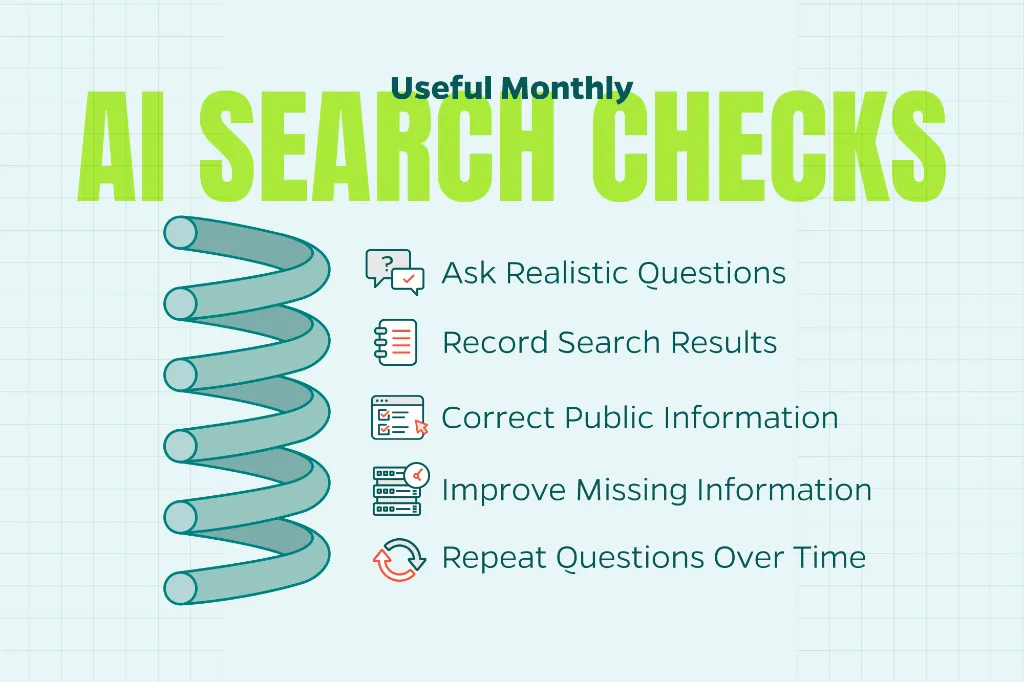
Useful monthly AI search checks include:
- Ask realistic questions prospects use when comparing firms or services.
- Record whether the firm is named, how it is described, and which sources appear.
- Correct inaccurate public information at its source.
- Improve missing service explanations, authorship, review processes, and outside evidence.
- Repeat the same questions over time without treating one answer as a fixed ranking.
For firms seeking a more systematic program, Straight North describes its AI search services at https://www.straightnorth.com/geo/. The goal is to make the firm verifiable and relevant, not to promise an AI citation.
SEO by Profession: What Changes for Each Type of Firm
The basic SEO workstreams remain consistent across professions, but the required review process, advertising restrictions, and most persuasive trust signals vary. A firm selling tax advice needs a different evidence strategy from one selling personal injury representation or architectural design. Industry-specific SEO begins by understanding those differences.
Accounting Firms
Accounting firms benefit from dedicated pages for tax preparation, bookkeeping, audits, and advisory services, along with pages for industries they understand deeply. Seasonal demand makes timing important: publish and update tax-deadline guidance before the relevant filing period, not after search interest peaks. Named CPA reviewers, accurate tax-year dates, and references to current IRS guidance help readers judge reliability.
The AICPA Code of Professional Conduct addresses false, misleading, or deceptive advertising, so claims about results and expertise deserve review. For specialist support, see https://www.straightnorth.com/accounting-seo-company/.
Personal Injury Law Firms
Personal injury search is intensely competitive because prospective clients often need immediate local help and the value of a retained case can be substantial. Practice-area pages should explain the types of matters handled, the intake process, relevant jurisdictions, and what happens at a consultation. Real office pages and consistent business information help local relevance.
October 2026 keyword research estimated a $57.48 Google Ads cost per click for “personal injury lawyer near me,” illustrating competitive paid demand rather than an organic SEO price. State bar advertising rules, including prohibitions on misleading statements, govern case results, testimonials, and attorney claims. See https://www.straightnorth.com/personal-injury-seo-company/.
Financial Advisors
Financial advisers should organize pages around retirement planning, wealth management, business-owner needs, and other services they truly provide. Location matters when clients want a nearby adviser, but a credible biography, professional designations, clearly described services, and transparent fee explanations can be just as important.
The SEC Marketing Rule places conditions on testimonials and endorsements for covered advisers, including disclosures and oversight; broker-dealer representatives may also face FINRA requirements. Have the firm’s compliance team approve public claims and review procedures. See https://www.straightnorth.com/financial-advisor-seo-company/.
Financial Services Companies
Lenders, payments providers, and fintech businesses operate in high-stakes financial categories. Their SEO content should make rates, eligibility, fees, risks, and product limitations understandable. Expert-reviewed explanations and dated source references matter because a misleading detail can affect a financial decision.
Technical SEO is particularly important on complex sites with product variations, application flows, and frequently updated disclosures. Marketing, product, legal, and compliance teams should agree on ownership of sensitive pages. See https://www.straightnorth.com/financial-services-seo-company/.
Architecture Firms
Architecture firms often rely on striking portfolios, but images alone rarely explain a project to a searcher. Each substantial project page should describe the client problem, project type, scope, constraints, approach, and outcome, with appropriate permission. Sector pages for healthcare, education, commercial, or residential work help buyers find relevant experience.
Architect biographies, AIA affiliations where applicable, awards, publications, and documented project experience add verifiable context. Image alt text and descriptive copy improve usability and search interpretation without replacing visual quality. See https://www.straightnorth.com/architecture-seo-agency/.
Profession | Content Reviewer | Rule to Check | Reviews / Testimonials | Strongest Proof |
Accounting | CPA or qualified tax specialist | AICPA conduct rules | Avoid misleading claims | Current, credentialed guidance |
Personal injury law | Licensed attorney | State bar advertising rules | Confidentiality and results claims | Relevant cases and local credibility |
Financial advisory | Adviser and compliance reviewer | SEC rule; FINRA where applicable | Disclosures and oversight | Designations and transparent services |
Financial services | Product, legal, compliance SMEs | Applicable financial advertising rules | Accuracy of claims and disclosures | Clear terms and reviewed explainers |
Architecture | Architect / project lead | Applicable professional standards | Project permissions and accuracy | Detailed portfolio and recognition |
This comparison is a planning aid, not a substitute for profession-specific legal review. Each firm should confirm the rules that apply to its licenses, jurisdictions, and marketing channels.
How to Measure SEO for a Professional Services Firm
SEO works when it produces qualified conversations and new business, not simply more visits. Start with consultation requests, qualified leads, booked meetings, and new clients attributed to organic search. Connect CRM outcomes with analytics where privacy, consent, and technical systems permit.
A useful monthly scorecard tracks:
- Consultations booked and qualified leads by service and source.
- New clients and estimated value from organic search.
- Branded searches for the firm and its professionals.
- Local profile actions, review volume, and reputation trends.
- Non-branded visibility for priority services and locations.
- Referral traffic from identifiable AI assistants in GA4, where available.
Compare results over several months and separate branded from non-branded activity. Competitive service searches often take months to improve; cleaning up a Google Business Profile or broken contact form may yield more immediate benefits. Avoid interpreting any single ranking fluctuation as business performance.
Doing SEO In-House vs. Hiring a Specialist
A firm can run SEO internally when someone owns the website and qualified professionals have time to contribute and review content. An agency can add technical audits, keyword research, content production, local SEO, and reporting capacity, but it cannot manufacture firsthand expertise or approve regulated claims on the firm’s behalf.
When evaluating a specialist, ask for relevant professional-services experience, a clear process for expert and compliance review, transparent reporting on qualified leads, and examples of how they improve service pages. Google also provides guidance on choosing an SEO: https://developers.google.com/search/docs/fundamentals/do-i-need-seo.
The best arrangement makes accountability explicit: professionals supply and verify the knowledge, marketers organize it for search, and the firm’s own reviewers approve regulated content.
Frequently Asked Questions
How Much Should I Pay for SEO Services?
Straight North’s SEO pricing starts at $1,500 per month, and most businesses invest $4,000–$8,000 per month. Actual scope depends on market competition, number of locations, website condition, and content needs. See https://www.straightnorth.com/seo/pricing/ for more information.
Is SEO Dead or Evolving in 2026?
SEO is evolving. AI answers create additional discovery paths, but clear pages, sound technical foundations, expert input, and credible reputation signals remain valuable across traditional and AI search.
What Are Professional SEO Services?
The phrase can mean SEO work performed by a professional agency or SEO designed for professional services firms. In the second sense, the program emphasizes expert-led content, service relevance, local visibility, and profession-specific review requirements.
Does a Referral-Based Firm Need SEO?
Yes. Referred prospects often verify a firm online before contacting it. Strong branded results, accurate bios, relevant service pages, and trustworthy reviews help the digital impression support the recommendation.
How Long Does SEO Take for a Professional Services Firm?
Improvement on competitive non-branded searches generally takes months, with timing dependent on the market and site. Fixes to branded search results, profiles, and contact experiences can sometimes show benefits sooner, but no timeline is guaranteed.
Need Help?
To discuss a trust-first search strategy for your firm, contact Straight North.
