

Remember the days before online shopping, when you had to visit different stores to find what you needed? Back then, businesses relied on word of mouth, television ads, or print ads in the local paper to get noticed.
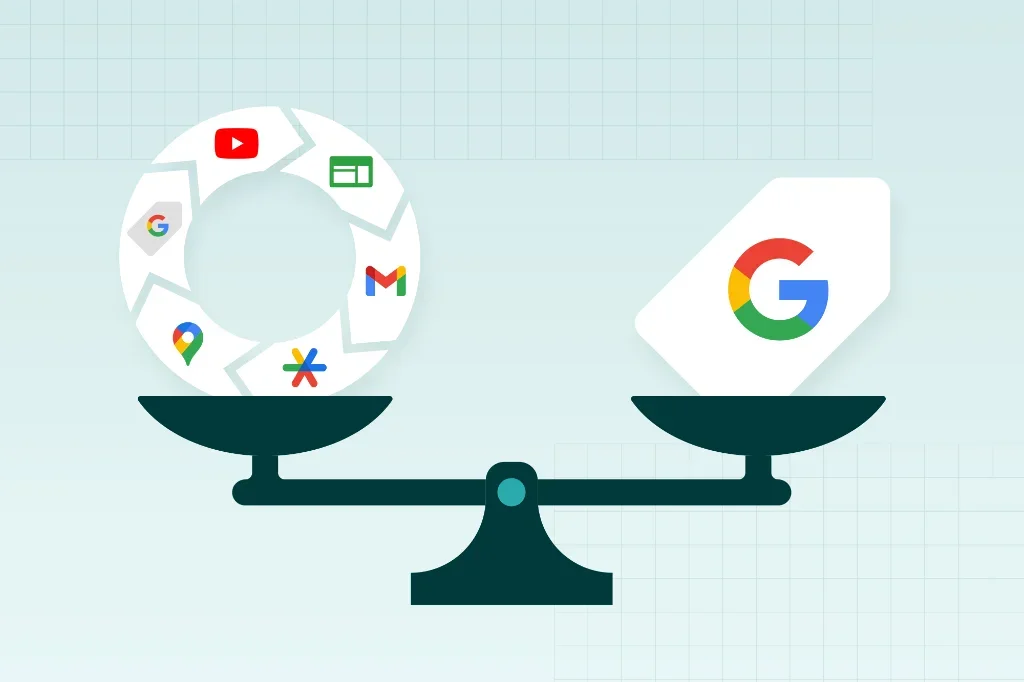
Fast forward to today where most shoppers turn to Google Search, and advertisers meet them there through Google Shopping. But with the rise of AI and Performance Max (PMax), there’s now a smarter, more dynamic way to reach customers across all of Google’s platforms.
To explore how PMax is reshaping e-commerce advertising, I spoke with Senior Paid Advertising Strategist Michael “Coach Mike” Lovelle, who specializes in optimizing campaigns to drive purchases and revenue growth.
What Is PMax and How Can It Help Advertisers?
Performance Max (PMax) is Google’s AI-driven, omnichannel campaign type designed to deliver ads across all of Google’s available networks. It automatically optimizes performance toward your selected goal. For e-commerce, this typically means driving purchases and maximizing revenue.
By leveraging machine learning, PMax goes beyond traditional campaigns to identify and target high-intent audiences actively searching for your products, ensuring your ads reach the right customers at the right time.
Why Should Businesses Use PMax?
When running successful campaigns, marketers focus on clear objectives such as driving online sales and revenue growth. PMax enables you to set precise conversion goals that align with these outcomes while leveraging Google’s full network reach — including Search, Display, Shopping, YouTube, Gmail, and Discovery — to connect with a broader, high-intent audience.
You’re able to essentially look at all of the data that is provided, and it also gives you the opportunity to add some creative assets as well, whether that’s images or videos. And essentially, what we can do is we can reach beyond the traditional keyword-based search campaigns, so not just only focusing traditionally on keywords, we’re able to essentially focus on other things, like audiences, to kind of hone in and target.
The tool is ideal for businesses with high-conversion volumes and ample creative assets.
What’s the Difference Between PMax and Standard Shopping?
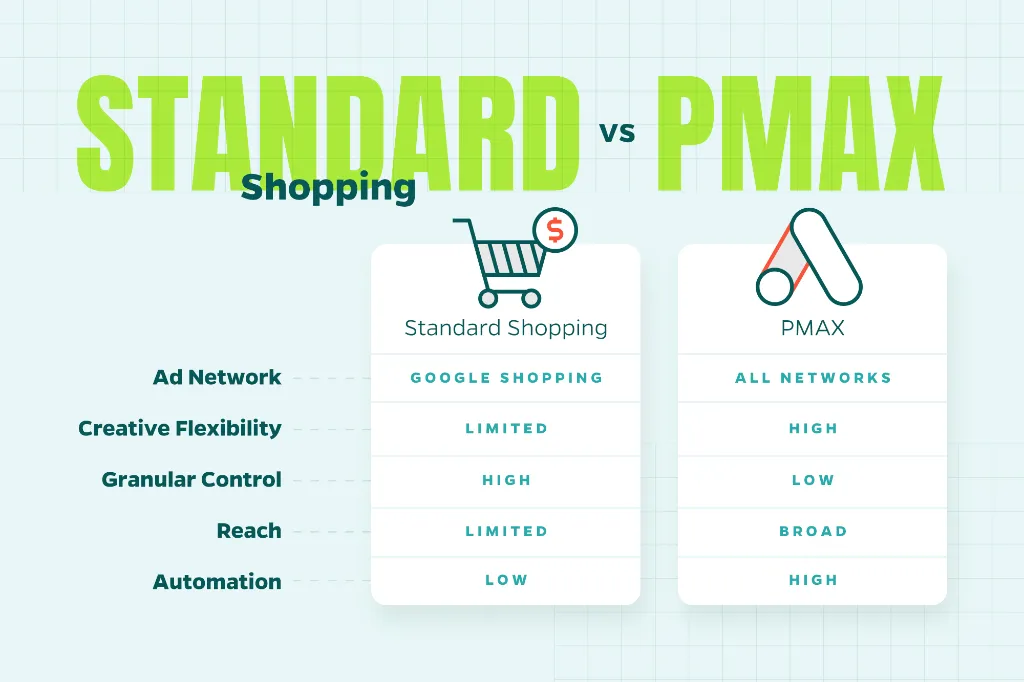
As Google continues to expand its investment in AI, PMax has become a cornerstone of its automated campaign strategy. With ongoing improvements and new capabilities, PMax empowers marketers to harness machine learning to reach high-value audiences, improve lead quality, and drive stronger business outcomes.
How Can I Optimize Targeting With PMax?
For an advertising campaign to be successful, businesses need to connect with the right customers who are actively looking for what they offer. PMax leverages audience signals to improve targeting through:
- Search themes (similar to keywords)
- First-party data (customer lists)
- Retargeting/remarketing (abandoned carts, past buyers)
- Custom interest audience (purchase intent keywords)
“We’re able to add something called the custom interest audience, where we’re essentially adding purchase intent keywords as well. We’re also able to target similar users to either our competitors or anyone that’s an ideal customer.”
What Are Some Best Practices for Product Feed Optimization in PMax?
You’ve set up your PMax campaign, and you need to refine your product inventory. What steps should you take next to ensure that you are maximizing your sales and getting the best visibility for your products?
Product Management
It starts with availability. Make sure to include all available and eligible products in the Shopping feed. Then, analyze performance data to determine: What’s selling? What’s stagnant? What products are getting the most revenue and strongest ROAS?
You can segment or pause low-performing items and optimize your campaigns based on revenue and ROAS metrics to focus spend where it drives the best results.
Product Attribution
Make sure that you are cataloging products with complete and accurate information. Focus on detailed and descriptive titles that include the following key attributes:
- Brand
- Type
- Color
- Size
- Gender
- Age Group
Front-loading key attributes is essential, as only the first ~70 characters are typically visible. Also, include unique identifiers like GTIN and MPN, as both are critical for ensuring proper product matching and availability in Google’s systems.

We want to make sure that if they are in stock and they are available, we want to make sure that they’re not paused, because we want to give the AI as much flexibility as possible by having as many products in there to advertise. Accurate pricing is huge, too, so we want to make sure that the pricing in there is as accurate as what we’re seeing on the website as well. And then, high-quality images. So, we want to avoid any smaller images, because they’re just not going to be seen, they’re not going to be applicable, and we want to make sure that we have the image. The link to the images in there as well, too. So the images are a huge deal as well, too.
How Do I Manage Product Prioritization in PMax?
Analyzing product performance helps determine which items deserve dedicated budget and which should be excluded to optimize overall campaign profitability.
High-Priority Products
Segment high-performing or strategically important products into separate asset groups or campaigns to give them focused attention. At the campaign level, allocate dedicated budget dollars to these products, which proves useful when targeting products with unique goals, higher margins, or distinct performance targets.
Low- or Non-Revenue-Producing Products
Start by removing these products from your listing groups. To identify them, use a Shopping products report to pinpoint low performers or unprofitable items. Once you identify them, exclude or negate these products within asset groups to better focus your spend on those that drive higher returns.
What Guardrails Protect Against Low-Quality Traffic?
Use Google Ads content suitability to control where your ads appear. This area allows you to protect your brand and ensure that your ads aren’t showing alongside sensitive topics or on undesirable websites, videos, or apps. Through campaign-level exclusions and account-level settings, you can mark those placements as negatives.
Additionally, review your inventory setting, which determines how broadly your Shopping ads appear across Google’s network:
- Expanded offers the widest reach, displaying ads across YouTube, Gmail, Discover, and partner sites. It’s ideal for testing visibility and discovering new audiences but may require closer budget monitoring.
- Standard focuses on Google’s core surfaces, such as Search and YouTube, providing a balanced mix of reach and control making it the best default for most advertisers.
- Limited restricts ads to premium placements like Search and the Shopping tab, ideal for high-value or brand-sensitive products where maintaining strong ROAS and brand consistency is critical.
Finally, use the PMax placement report to review where your ads are showing. If you notice irrelevant categories — such as blogs, job or career pages, games, or apps — add those URLs as exclusions. You can also apply negative keywords as an extra layer of protection against low-quality traffic.
“When we look in the search terms report, we can see exactly what keywords or search terms are driving revenue and producing ROAS. If we see that there are ones that are not applicable, we can always add them as negative keywords now at the campaign level, too.”
Final Thoughts and Key Takeaways
After talking with Coach Mike, it’s clear that PMax gives advertisers far more control and flexibility than many realize. As Google continues to invest in AI-driven campaign models, these advancements are unlocking new opportunities to refine targeting, set smarter parameters, and extract deeper insights through enhanced reporting.
PMax is evolving into a more adaptive, data-informed campaign type that empowers marketers to balance automation with strategy, and performance with brand growth.
Key Advantages of PMax:
- Broader reach and cross-network visibility across Search, Display, YouTube, Gmail, and Discover
- AI-driven optimization that unifies data and performance across channels
- Increased advertiser control with improved reporting and targeting levers
- Branding and awareness lift that complements conversion-focused goals
- Integrated impact combining Shopping performance with brand visibility to maximize impressions, clicks, and revenue potential
So PMax and the Standard Shopping, like I mentioned before, Standard Shopping is gonna be just on that shopping network. If we’re utilizing PMax, and we’re advertising all the products, and we’re able to utilize it on all the networks, it also kind of helps in that sense with more of that branding and awareness strategy. Because, yeah, we’re advertising our products, but at the same time, we’re also going in those lower quality networks like display and video, and we’re able to generate more impressions and more clicks. So, not only does PMax work as that all-encompassing Shopping style, it can also be used to hit a bunch of different type of goals and KPI strategies with, branding, with more awareness, and just getting more eyeballs on there.