

It’s time to make dinner, and you want to try something new. You consider winging it, but then remember you’re not a professional chef. So you get out the recipe and follow it step by step to ensure the meal turns out as planned.
Whenever you are starting something new, having directions or steps to get you there is the most likely way to find success. Why should your journey with SEO be any different?
Enterprise SEO Strategist Marc Holt shares why having a clear SEO roadmap reduces overwhelm and brings direction to your strategy. And with AI tools and Google Analytics, you’ve got powerful engines to help drive your progress.
Why an SEO Roadmap Matters
Like most tasks, SEO can be confusing and feel like a massive undertaking when you first start out. A roadmap helps simplify the process by breaking it into clear, sequential steps, giving you a firm starting point for improving your site’s search performance.
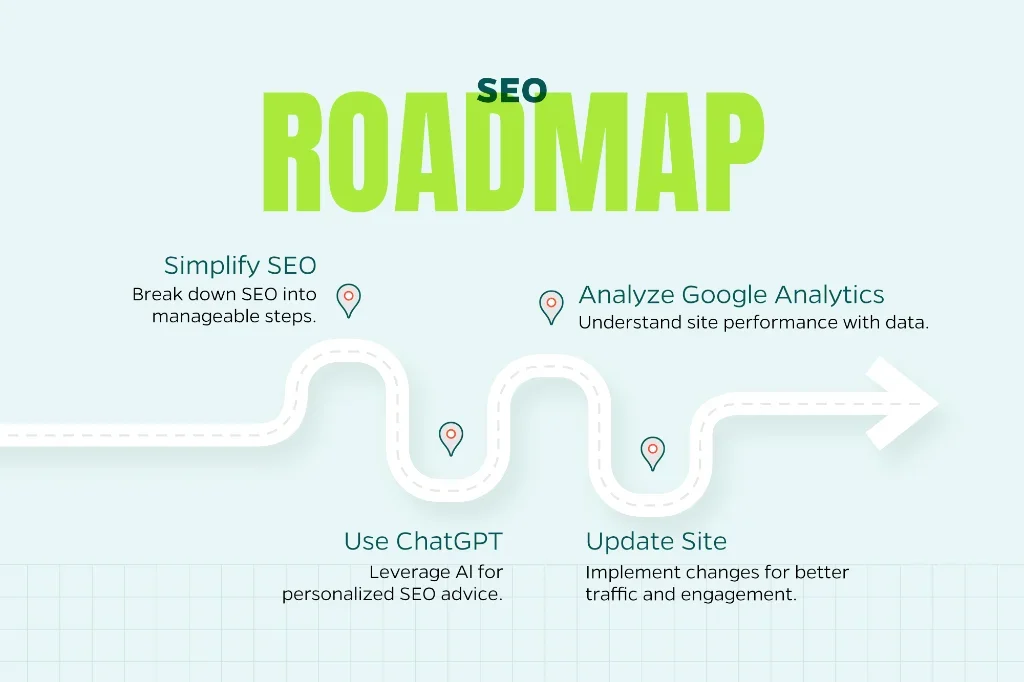
Your best guides for this journey are ChatGPT and Google Analytics. You can get generic advice but it’s not going to be as helpful as it’s not showing the true picture of what’s happening with your website. AI can analyze what’s happening on your site and then guide you to a more personalized plan for updating for better traffic and engagement.
“This organized approach makes the whole process feel much more manageable.”
Setting Data-Driven SEO Goals
Know what you are trying to achieve from the start. What are your top-performing pages? Marc explains why this matters:
Two main goals are to get more traffic from search engines and to increase engagement on your site. This means you want more people to find your website when they search online. Once they arrive, you also want them to stay longer and interact with your content.
You can also use past performance to set better future goals. By using ChatGPT and Google Analytics, you have clear data guidance on which pages are working well and which need improvement. Maybe one page is getting more clicks than others? That’s essential to know so you can create more content for that page and on those topics. The data helps you set realistic growth expectations based on what’s already happening on your site.
Start With This Key Google Analytics Report
Finding out what’s working and what’s not on your website doesn’t require hours of mental gymnastics. You can use the power of analytics and data, or more specifically, a report from Google Analytics.
The Pages and Screens report, found in the Engagement section, reveals your most popular and high-engagement pages. Learn more about what your audience is viewing and how long they are staying there.
Use AI to Identify Improvement Opportunities
Upload the report into ChatGPT to help you understand which pages are performing best and which are losing traffic to give you a better idea of where to go next with your roadmap. Marc explains what prompts to use to get started.
A good prompt might be, which blog posts need more updating, or show me pages with high impressions but low click-through rates. These prompts ask the AI to find content that is being seen but not clicked on, or old posts that no longer perform well. This helps you identify which pages to focus on for the biggest impact.
Now you know where you need to place more attention on your site. What can you put on those pages to keep visitors engaged?
Turn Top Content Into New Article Ideas
The Pages and Screens report has another great use. You can upload it into ChatGPT to get keywords and blog topics based on the most popular content on your website.
Maybe you’ve topped the market talking about SEO. What areas of SEO are missing from your pages? What subtopics can you come up with to continue to engage users?
AI will generate ideas aligned with proven audience interest.
Choose the Right Keywords to Target
Start with a mix of fresh keywords and ones you’re already ranking for. If you’re already ranking well for certain terms but haven’t reached page one on Google, improving those keywords first can deliver quick wins. You can always expand your keyword list later using ChatGPT to identify gaps.
Next Steps for Your Action Plan Roadmap
What are some quick wins and what are long-term goals? ChatGPT can help prioritize these for you. Start with these two high-impact tasks:
- Refresh outdated blog posts.
- Optimize top landing pages for better conversions.
“These tasks often provide the fastest results because you are building upon content that already has some traction.”
Long- and Short-Term Roadmap Goals
It’s about motivation. The short-term actions are quick wins. They keep you driven and motivated to get the long-term tasks done as well. These actions are important for authority-building, and sustainable growth.
Both keep the SEO plan achievable and keep you consistent.
Progress Updates on SEO Roadmap Plan
Remember that recipe analogy? When you are making something for the first time, it’s best to double check your steps. Did you put all the right ingredients in? It’s how you know it will turn out right.
The same is true for your SEO plan.
Set a monthly or quarterly reminder to check your Google Analytics to see how things are going and adjust your plan to stay focused on what’s working.
A key metric to watch for is your organic traffic, which is the number of visitors from search engines. You can also look at engagement metrics, like average time spent on your site. If these numbers are going up over time, it’s a strong sign that your SEO plan is successful.
ChatGPT, combined with your Google Analytics data, keeps your strategy clear, personalized, and data-driven.
First Report to Upload Into ChatGPT to Jumpstart Your SEO Plan
ChatGPT is most helpful when you supply it with the right prompts and data. Use the expert prompt from your article to prime the AI for analysis before you do the upload. Then, you can upload the Pages and Screens report to get a clearer picture of your content’s performance.
Let the Written Roadmap Be Your Team’s and Client’s Guide
Ultimately, a written roadmap turns SEO from an overwhelming challenge into a shared, strategic effort. It clarifies your approach and strengthens trust. The roadmap ensures that everyone involved understands the steps needed to reach your goals. With alignment and transparency, your SEO journey becomes a lot smoother and far more successful.
Key Takeaways
- An SEO roadmap removes the guesswork and gives you clear, prioritized steps.
- Using ChatGPT with your real Google Analytics data leads to smarter, personalized recommendations.
- Your Pages & Screens report is the best place to start when setting goals and finding content to improve.
- Focus first on updating old posts and optimizing top pages for quick wins, then review your roadmap regularly to stay on track.