



Build authority. Boost brand visibility.
Think of these as the foundation of an off-site content strategy that actually delivers. Building authority starts with showcasing your expertise by creating trustworthy, original content that stands out in your niche. And boosting brand visibility comes from putting your insights in front of the right audiences, through strategic outreach and collaboration.
Offsite SEO Expert Adam Rosenbaum breaks down how to bring it all together. From uncovering unique data to partnering with industry experts, you can turn these goals into measurable results.
How to Find Unique Data
Start with a combination of data-driven insights and creative storytelling. Then, explore which topics are getting the most attention in your industry by using tools like Ahrefs and Semrush to identify topics, formats, and content lengths that earn the most engagement and backlinks.
You’ll want to analyze trends in the following areas:
- Content formats and length
- Supporting data types
- Audience engagement patterns
You don’t have to find all this info on your own. Fortunately, there are tools like Google Search Console and keyword research tools to help identify content gaps and opportunities. And don’t overlook primary sources including industry reports, case studies, and academic papers that all add credibility and depth to your content.
You don’t want to overlook the power of original data collection, because your surveys, your polls, your customer insights, you know, those can really help transform a piece from, informative to authoritative. And then you use, like, a tool, maybe like a Google Trends, to validate that momentum, make sure your topic is timely enough to gain traction. You know, is it something that’s in the market and people are looking for right now? So you layer those methods on, and then you’re not just finding data, you’re uncovering stories that have value, credibility, and ultimately staying power.
Combine Competitor Research and Original Data for Authority
To build authority in your space, start with competitors and backlink analysis. See what’s already out there and identify fresh angles that showcase your expertise.
When working on content design to support thought leadership, blend both approaches. Use competitor analysis to understand what the market values, then layer in first-hand insights or expert commentary to elevate your piece.
Aim for originality and create your own research through surveys or proprietary data. Editors love fresh, verifiable insights that no one else has. If your goal is to drive conversions, prioritize original research. Exclusive data helps your content stand out and strengthens your credibility, because editors prefer publishing insights that are uniquely yours.
“Every off-site content project should really start by someone asking: what can we add to this conversation that no one else has?”
Use Expert Quotes to Strengthen Off-Site SEO Content
Staying relevant and on topic is tough when there’s so much competition in your area, that’s why it’s essential to focus on credibility and relevance. Seek out the experts in your niche and see if they are open for media commentary. You can check platforms like HARO or LinkedIn to find these voices.
When you want to add additional credibility to what you are saying, having these voices available to weigh in helps to validate your claims, adds authority, and introduces unique perspectives. Overall, you’ll want to balance their expert insights with your original research to build cohesion in your writing.
How to Reach Out and Secure Expert Contributions
When you are looking to secure experts for your interviews and quotes, be clear with your communication. Keep it short, professional, and state what you need. Adam gave a great breakdown on how this communication should go:
When you reach out, lead with why their expertise matters. Explain the topic’s context, the type of content you’re creating how their insight’s going to be positioned. You want to keep the outreach short, professional, and personalized. Demonstrate that you’ve done your homework by referencing their work or recent commentary. The expert’s far more likely to contribute when they see genuine interest in their perspective, and it’s not just kind of blowing smoke. It also helps to highlight, you know, exposure value, mention where the content’s going to be published, how it’s going to be promoted, how their contribution is going to be credited, and then just make the overall process easy for them by providing flexible options to, you know, share that insight, whether it be a short written response, a brief interview, like we’re doing, you know, or quote approvals. Building and maintaining those relationships, though, over time creates a network. You’re essentially networking at the same time, so it’s a bunch of trusted voices to draw from for future off-site pieces. So if you nail it the first time, you may have someone that you can go back to, you know, a second, third, fourth, fifth, and forever, really.
Evergreen vs. Timely Content: Which Is Better for SEO?
It’s time to establish yourself further as an expert on a topic. Evergreen content is where you can really show up with long-term authority. Look to create white papers or articles on best practices or create in-depth guides that have great shelf life. This type of content will achieve your goal of consistent traffic and create additional opportunity for backlinks.
Did you just come out with a new product or perhaps you have some industry breakthrough that you need to announce? You’ll want to put out a press release, a blog post, or a social media post to get quick attention and drive potential customers to your site. Timely pieces help you build buzz around what’s new and exciting.
You can reel them in with a fun TikTok challenge or a social post that gets people excited and participating. Once you have their attention and they start to know your brand better, you can introduce them to your more evergreen papers and studies. Give them the guide you created. This is how you build a lasting relationship and your credibility in the space.
How to Keep Evergreen SEO Content Up to Date
How long is too long to leave a guidebook or a research study untouched? With how fast things are moving in the world right now, you need to be reviewing your evergreen content one to two times a year and checking its relevance. People go back to these resources regularly, so broken links or outdated statistics can hurt you if you don’t make updates. Also, look at any visuals or expert quotes. Are they still up to date? If not, look to amend the data by scheduling reviews and interviews to update it. It reestablishes your commitment to the content and keeps you trustworthy as a source.
“You really want to treat evergreen content as a living asset. Small, consistent updates help maintain its authority and preserves the rank and linkability over time.”
SEO Writing Tips: Balance Keywords and Readability
You may be writing to get more hits on Google, but you also have to remember that a human is reading your content. SEO and readability don’t play on different teams, they are partners. Focus on intent first and optimization second.
To achieve this balance:
- Write for the reader’s problem, not the keyword.
- Use semantic variations to avoid repetition.
- Format for clarity with short paragraphs, bulleted lists, and descriptive subheads.
These tips help readers and help LLMs with AI interpreting the content.
How to Make SEO Content More Engaging
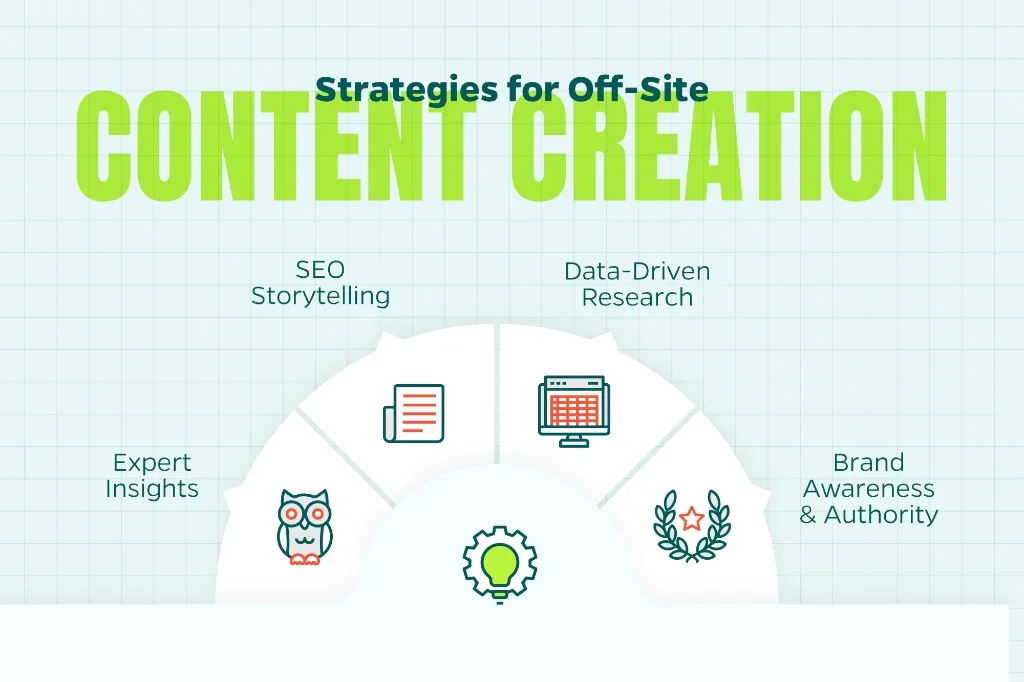
Get creative. Use strong hooks, real examples, and be conversational. You need to prioritize storytelling and clarity. Visuals and transitions truly help the flow of your writing making complex topics easier to digest. You want to keep your audience engaged and build a human connection by adding your voice to the writing. Ultimately, it helps you build trust and boost engagement.
Case Study: Effective Off-Site Content Campaign
Adam shared one of the most effective off-site content campaigns he’s worked on — Straight North’s collaboration with ProStockHockey.com. Using their digital marketing expertise, the team helped the company grow its online presence and reach new audiences. One standout project from that partnership was the Goalie E-Book. Here’s how Adam described it.
So I certainly can’t take credit for writing any of this, but during my time at ProStock Hockey, I helped create what we called the Goalie E-Book, and it was a joint effort from myself, design team, and then many current and former goaltenders in professional hockey. It started with analyzing the industry to confirm the hockey space was open for something like this. And it was one of our first content assets to bring to the space. So from there, I reached out to as many current and former goaltenders as I could to bring their advice to life through this online book that the design team made very usable for everyone to view. And once all was said and done, the book was getting rave reviews from hockey and sports sites in general. It was a great combination of something that helped bring links for the site, performance, but even more importantly, something that really helped establish the brand. It showcased ProStock Hockey as more than just the newbie in the equipment world. I think a lot of people looked at this book and said, “Oh, wow, look at what they’re putting out”. This is some really quality stuff. Look at the connections that they have. And it just really, really blew up. People wanted to have it. They wanted to have it on their site, too. It was great.
Key Takeaways: Build Authority With SEO
Make sure to focus on creating value. It’s not all about chasing links. When content genuinely informs and inspires, engagement follows naturally.
The goal of off-site content isn’t just SEO, it’s to serve the reader with useful, authentic, and data-backed insights.
“When you approach off-site content as a service to the reader, rather than a tactic for SEO, the results are going to be that much stronger, it’s going to be more sustainable, and at the end, it’s going to be far more impactful.”