




Patients today research a provider long before they book an appointment. They read reviews, scroll through websites, and form an impression of a practice’s trustworthiness within seconds of landing on a homepage. That impression is the brand at work, and it is doing more to shape patient decisions than any single ad or referral ever could.
In healthcare marketing, branding is not a logo refresh or a new color palette. It is the sum of everything a patient believes about an organization. That covers everything from the tone of a blog post to the way a front desk staffer answers the phone. Whether you are marketing a single-location clinic or a multi-hospital health system, a deliberate branding strategy is one of the most durable investments you can make.
Why Branding Carries Extra Weight in Healthcare
Healthcare decisions are personal and often high stakes. Patients are not just choosing a service provider; they are choosing who they trust with their health, their family’s health, or a difficult diagnosis. That emotional weight changes how branding functions in this sector compared to most others.
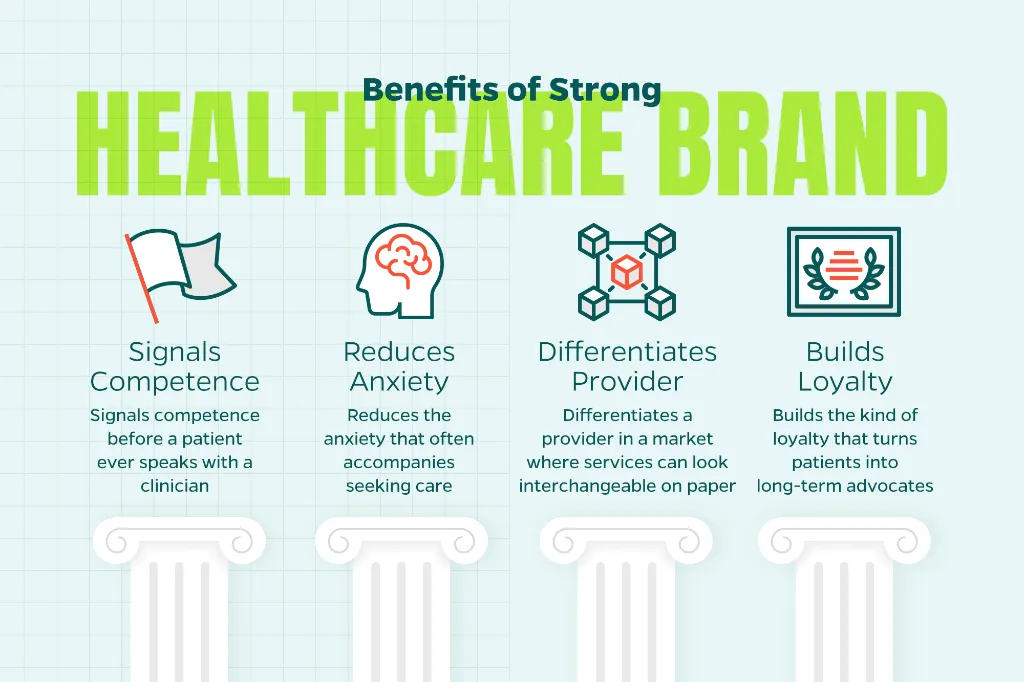
A strong healthcare brand does a few specific jobs:
- Signals competence before a patient ever speaks with a clinician
- Reduces the anxiety that often accompanies seeking care
- Differentiates a provider in a market where services can look interchangeable on paper
- Builds the kind of loyalty that turns patients into long-term advocates
None of this happens by accident. It requires the same intentional strategy that consumer brands use, adapted to the realities of patient trust and clinical credibility.
Start With a Clear Patient Promise
Your organization should have a specific, believable statement of what patients can expect. For a pediatric practice, that might be calm, judgment-free visits for anxious kids. For a large orthopedic group, it might be getting active patients back to their routines faster.
The mistake many healthcare organizations make is defaulting to generic language such as compassionate care or state-of-the-art facilities. Those phrases describe nearly every provider in the market, which means they describe none of them well. A useful exercise is to ask what your organization delivers that a patient could not get, or would not expect, somewhere else. That answer becomes the foundation for messaging, website copy, and even how staff are trained to talk about the practice.
Build Consistency Across Every Touchpoint
Branding fails when it lives only in marketing materials. A polished website paired with an outdated intake process, or a warm social media voice paired with a curt phone call, tells patients the brand is not to be trusted. Consistency is what turns a brand promise into a believable one.
Consider auditing these touchpoints for alignment with your intended brand:
- Website messaging, imagery, and calls to action
- Patient-facing email and appointment reminders
- Social media tone and posting frequency
- In-office signage and printed materials
- How front-desk and clinical staff describe the practice in their own words
Large health systems face a particular version of this challenge. Individual departments or acquired practices often develop their own visual identity over time. A brand style guide, paired with training for marketing teams across locations, keeps the experience unified even as the organization grows.
Humanize the Brand Without Undermining Authority
Healthcare marketing must balance two things that can feel at odds: clinical credibility and human warmth. Lean too far toward clinical language and the brand feels cold and institutional. Lean too far toward casual warmth and patients may question whether the organization takes their care seriously.
The organizations that get this right tend to feature real people rather than stock imagery, share patient stories with permission, and let physicians and staff show personality in blog content, video, and social posts. A surgeon explaining a procedure in plain language builds more trust than a paragraph of technical jargon, and it still reads as expert because the expertise is evident in the explanation itself.
Adapt the Strategy to Your Organization’s Size
A solo practice and a regional hospital system are not fighting for attention the same way, and their branding approach should reflect that.
Small and independent clinics often win by leaning into personal connection. Owners and lead clinicians can be the face of the brand, local community involvement carries real weight, and a smaller footprint makes it easier to keep every touchpoint consistent.
Larger institutions carry more built-in name recognition but also more complexity. Their branding work often centers on organizing many service lines and locations under one coherent identity, clarifying which specialties or centers of excellence define the system’s reputation. This gives individual physicians room to build their own visibility within the larger brand rather than being flattened into it.
Measure What the Brand Is Doing
Branding can feel intangible, but its effects show up in measurable ways. Tracking a handful of indicators over time helps confirm the strategy is working rather than just feeling right internally:
- New patient volume by referral source and marketing channel
- Website engagement and time on page for key service lines
- Online review sentiment and volume
- Patient retention and appointment no-show rates
- Brand recall in patient surveys, where feasible
None of these metrics tell the whole story on their own, but together they show whether the brand promise is translating into patient behavior.
A healthcare brand built on a clear promise, consistent execution, and a human tone does more than attract new patients. It builds the kind of trust that keeps patients coming back and referring others, which is the outcome every provider, regardless of size, is ultimately working toward.
Ready to Strengthen Your Healthcare Brand?
Contact Straight North to learn how our team can help you build a healthcare branding strategy that earns patient trust and drives measurable growth.