

Remember the original ALS Ice Bucket Challenge? To raise awareness and funding for ALS research, people dumped buckets of ice water over their heads, shared the videos online, and challenged friends to join within 24 hours.
What made this guerrilla campaign so successful was its organic start: millions of people created and shared content on their own, turning it into a fun social phenomenon that spread rapidly.
But do you really need a viral movement like the Ice Bucket Challenge to run a successful campaign? While that initiative was certainly an example of “outside-the-box” thinking, there are many other effective ways to create excitement and boost brand visibility.
Off-Site SEO Expert Adam Rosenbaum shares a variety of off-site marketing strategies that can generate meaningful engagement and deliver real SEO value for your company.
Ensuring SEO Value With Guerilla Campaign Content
Consider leveraging recent research you’ve conducted or developing something uniquely insightful to create linkable content that naturally attracts more views. Adam recommends prioritizing strategy over spectacle by ensuring your campaign has a clear SEO purpose, whether you’re aiming to boost branded search or earn authoritative mentions.
From there, pair your content with intentional PR and outreach efforts. Publishers are far more likely to feature your brand when you give them something valuable to link to and a compelling reason to mention you.
Avoid Gimmicks
It’s good to be creative and fun but make sure the content still aligns with your brand and image.
Focus on authenticity and relevance. So the concept needs to align with the brand’s identity and offer genuine value to the audience, whether it’s through humor, surprise, emotion, or just general insight. A campaign becomes a little gimmicky when it relies solely on the shock value, without serving a larger purpose. So, by connecting the idea to a real-world trend, you know, cultural movement, you can create something that people naturally want to discuss and share, which ultimately strengthens the engagement.
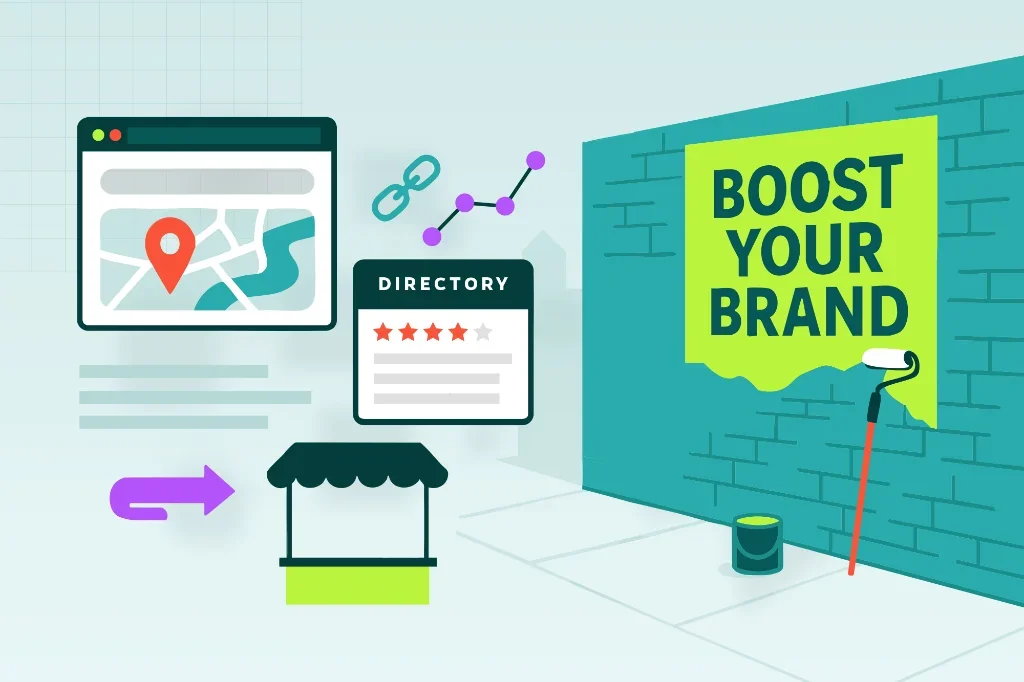
Your campaign is garnering your company a bunch of attention. Now more people want to know more about your company. Are you sure that they can easily find your website and contact info? If your information is not correct in your GBP or other listings on the web, then you are doing yourself a disservice.
Strategy to Optimize Local Listings and Citations
Picture this: A new restaurant opens in a fantastic location. The food is incredible, the ambiance is spot on, and the staff is ready to impress. A handful of patrons stop in because they know the owner or one of the servers, but beyond that, foot traffic is minimal and business begins to slump.
Why? The restaurant moved into a space previously occupied by another business, and no one updated the online information. The phone number is wrong, the website link is broken, and as far as Google and other directories are concerned, the new restaurant doesn’t even exist.
This is where your NAP (name, address, and phone number) comes into play. Consistency across every platform matters. Keep this information clean, accurate, and uniform, and support it with clear business descriptions, local modifiers, and strong value propositions. That clarity builds trust, strengthens local relevance, and ensures customers can actually find you.
NAP Consistency Matters
Remember the restaurant change above? The same goes for branding. If you change a part of your brand (logo, colors, website), be sure to update it across the board to avoid confusion. It can also build distrust. Users may bounce or avoid clicking links if listings are mismatched or suspicious. Photos, links, and details influence credibility and trust in a product or service.
“Whenever you’re doing brand name updates, new websites, or similar changes, think back and ask yourself: Where are our listings at? How can we make sure those are all updated and relevant, too?”
How to Make Your Business Directory Content Stand Out
Now that you’ve gone through the steps to update your contact information, it’s time to make your listing more robust.
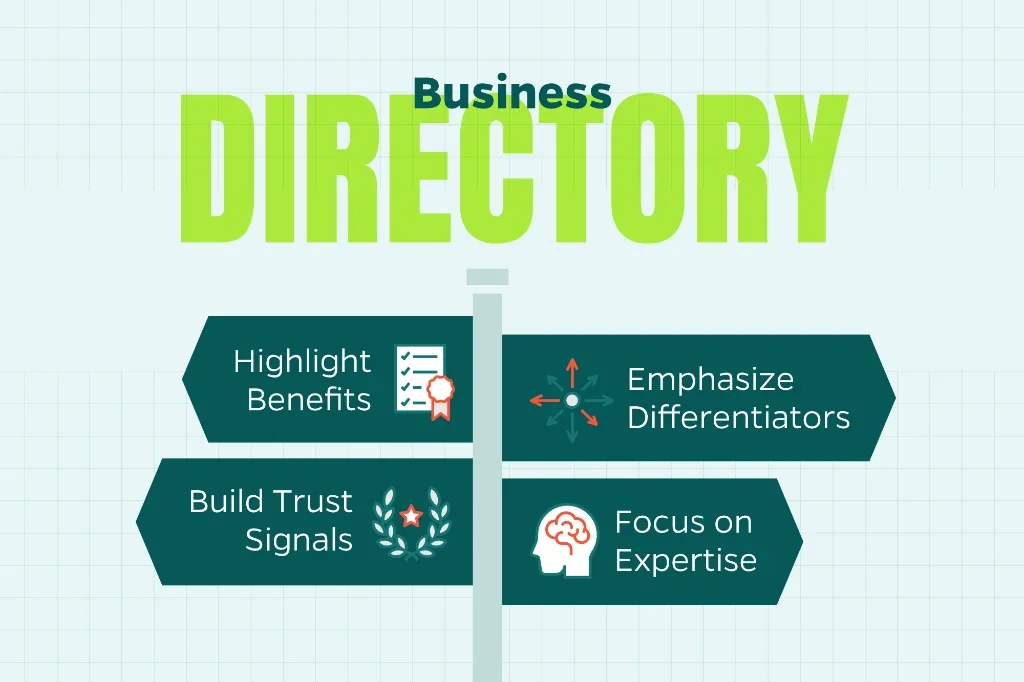
What are your specialties? Talk about your experience and local expertise. Does your company offer guarantees? Be sure to spell those out as well. You want to set yourself apart and explain what makes your business unique. Share why potential customers should choose you over your competitors.
Expand Your Business’s Reach With Press Releases
Press releases help build brand awareness, highlight newsworthy updates, and potentially drive referral traffic. But their structure matters.
Structuring Press Releases for Maximum Pickup and Link Value
You should structure a press release the same way journalists approach their work. So, a strong headline introduces the news angle clearly, followed up by an opening paragraph that summarizes the essential information. Any additional paragraphs help provide context, data, significance, while an authoritative quote adds credibility and human perspective. So, the press release should end with a concise call to action, and a professional boilerplate that reinforces the brand authority, including any unique insights or proprietary data, really gives the journalists a reason to reference and link back to the source.
Balancing Journalism and SEO
Begin with the core facts. Make sure your press release communicates the message clearly, accurately, and with the objectivity expected in journalism. After that foundation is set, you can thoughtfully integrate natural keywords and relevant links to strengthen SEO. These additions should complement the content without undermining its credibility.
How to Drive Content Engagement in Ad Campaigns
Advertising campaigns interrupt the scroll, so the message needs to instantly signal value. Lead with a hook like “The customer trends no one saw coming” to spark curiosity and frame the content as exclusive, high-value insight. Emphasize what the user will gain such as surprising behavior shifts, strategic takeaways, or industry-shaping data, so the content feels worth discovering rather than promotional.
The goal is for your content to feel worth discovering, not promotional.
“Messaging that hints at exclusive insights, surprising results, or high-value takeaways encourages the user to click through. And that approach positions the content as something worth discovering, rather than simply another advertisement.”
These promotions are the most useful when you know it’s added-value content. Think of it like watching a TV show when you see “Don’t miss next week’s episode for the big reveal,” your interest spikes because you’re already engaged.
Measuring ROI From Ad Promotion
- Track direct metrics: CTR, time on page, scroll depth, and completion rates show how effectively advertising promotion drives engagement
- Monitor indirect impact: branded search lift, reach, visibility, social engagement, and earned media indicate how ads exposure boosts overall brand presence
- Think beyond conversions: ROI includes long-term gains like stronger visibility, improved SEO, and greater authority, not just immediate leads
The Alternative Marketing Strategy Most Brands Are Missing
Adam revealed the strategy he thinks marketers should be using far more often, and it might not be what you expect.
I think one of the most underutilized strategies today is community-driven activation, like a local partnership or a pop-up collab, you know, or just something cause-focused, that kind of initiative. Those are the efforts that generate more organic conversions, they get a lot of local media coverage, they get influencer engagement, all of which indirectly support SEO and overall brand visibility. Because these strategies blend real-world presence, with the digital amplification, they offer a unique opportunity for off-site impact that many brands just simply overlook.
Which Route Is Best? Unconventional vs. Traditional Approaches
Choosing between unconventional and traditional marketing depends on your audience and objectives. Unconventional tactics drive buzz and differentiation, while traditional methods provide consistency and credibility.
Ultimately, the strongest results come from blending both. Efforts that build your brand off-site including events, partnerships, activations indirectly support SEO and expand your overall presence.
Ultimately, the decision, you know, really depends on where the audience is most likely to engage, how bold the brand is willing to be and put themselves out there, and which approach best supports the desired outcome. But in many cases, I’d say in most cases, blending both methods creates the strongest overall impact. It kind of goes back to… it’s like, where should we put our marketing dollars? And it’s, like, everywhere. You know, if you… obviously, if you have the means to do it. But I think that’s one of those things where, you know, hey SEO is aided by other areas. I think people often overlook that. When you’re building the brand, you know, in a local community event or something. That matters. Like, it all… at the end of the day, it all comes back to marketing. How is our marketing doing? So, if you’re helping build the brand off your website, you naturally will help the actual website at the same time, so yeah, everyone kind of puts SEO in a bucket, but it’s really… there’s a lot of different buckets, and they all help each other.
Key Takeaways
- Lead with value, not gimmicks. Authenticity earns engagement and SEO impact.
- Keep local listings clean. Accurate NAP data boosts trust and discoverability.
- Differentiate your directory profiles. Highlight specialties, guarantees, and unique value.
- Think like a journalist with press releases. Start with strong news angles first, SEO second.
- Blend approaches. Unconventional tactics drive buzz, traditional methods drive credibility, and together they deliver the best results.