

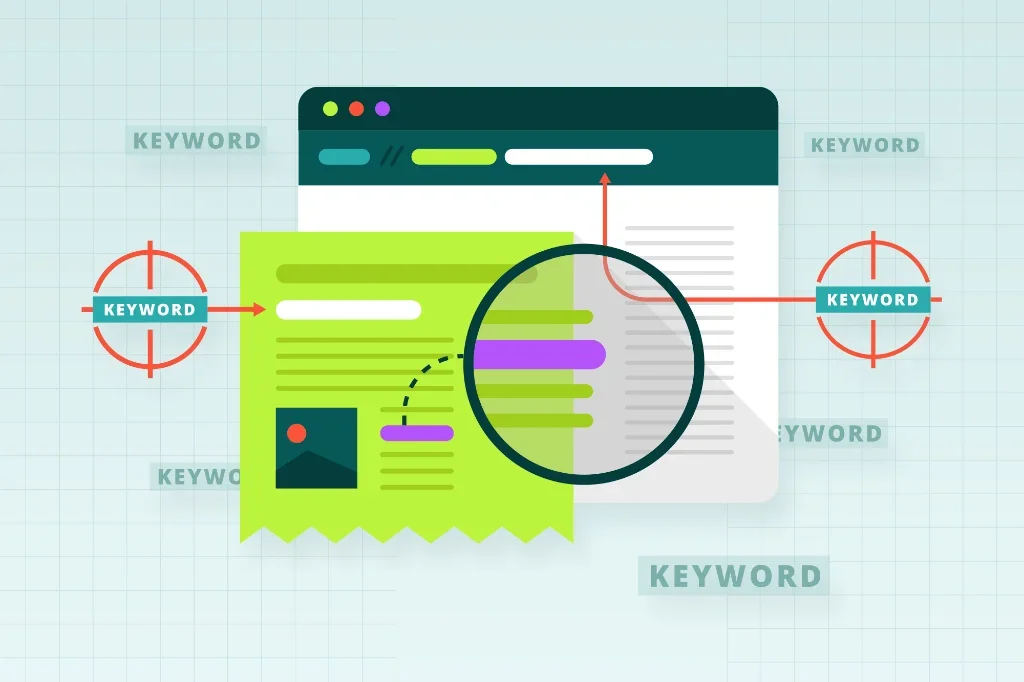
Keyword research tends to dominate SEO conversations. Yet, keyword placement is where your strategy delivers results. You can spend a lot of time identifying the perfect keywords for your business. But if those keywords are scattered randomly across your pages or crammed awkwardly into sentences, they won’t make the impact your desire on your rankings or conversions.
The days of keyword stuffing are over. Smart keyword placement signals relevance to search engines. It also keeps your content clean and trustworthy for actual readers. When you get it right, keyword placement boosts rankings, improves click-through rates, and guides visitors toward taking meaningful action.
This article walks you through ideal placement of keywords. We will explore how to use them naturally and flag common mistakes to avoid as search engines increasingly reward quality and intent over manipulation.
What Keyword Placement Really Means Today
Keyword placement refers to where and how your target keywords show up on a webpage. In the early days of SEO, many marketers tried to repeat exact phrases as frequently as possible. Today, search engines are far more sophisticated. They focus on context, user intent, and semantic connections.
Modern search engines analyze meaning, not just word matching. They evaluate how keywords fit within your headings, copy, internal links, and supporting content to determine whether your page genuinely covers a topic in depth. That means your keyword placement should reinforce relevance without making your writing feel robotic or forced.
Put simply, keywords should help search engines understand what you’re offering while helping users quickly confirm they’re in the right place.
Strategic Locations for Keyword Placement
Not every placement carries equal weight. Some page elements have a stronger impact on rankings, while others primarily support usability and engagement. Below we will break down the areas you want to focus on.
Title Tags
The title tag remains one of the most critical on-page SEO elements. It helps search engines grasp page relevance and significantly influences whether users click your result in search listings.
Best practices include:
- Placing your primary keyword near the beginning of the title
- Keeping titles concise and readable (typically under 60 characters)
- Avoiding unnecessary repetition or filler words
A well-crafted title tag balances keyword clarity with a compelling reason to click.
Meta Descriptions
Meta descriptions don’t directly affect rankings, but they heavily influence whether users choose your result. Including keywords here reinforces relevance and can boost click-through rates by matching what people are searching for.
Focus on writing descriptions that:
- Clearly summarize what the page offers
- Use keywords naturally, not mechanically
- Encourage action without sounding overly promotional
Think of your meta description as ad copy for your content.
URL Structure
Clean, descriptive URLs benefit both users and search engines. Including your primary keyword in the URL improves clarity and reinforces your topical focus.
Effective URLs are:
- Short and readable
- Free of unnecessary parameters or random characters
- Structured logically within your site hierarchy
Once published, URLs should remain stable to avoid creating unnecessary redirects that can dilute authority.
Headings and Subheadings
Headings organize your content and signal topic coverage. Search engines use them to understand page structure, while readers rely on them for scanning and navigation.
Best practices include:
- Using your primary keyword in the H1 when it makes sense
- Incorporating related terms and variations in H2s and H3s
- Writing headings that are descriptive and informative, not repetitive
Headings should guide readers through your content, not just serve as SEO checkboxes.
Main Body Content
This is where keyword placement requires the most finesse. Keywords should appear naturally within your copy. Their job is to support clarity and depth rather than disrupt the reading experience.
Effective keyword usage in body content involves:
- Introducing your primary keyword early on the page
- Using synonyms and related phrases throughout
- Writing for comprehension first and optimization second
If a keyword feels forced, it probably is. Read your content aloud. If it’s canned, cut it. Awkward phrasing is often a telltale sign of over-optimization.
Images and Alt Text
Images enhance user experience and provide SEO opportunities when optimized correctly. Alt text helps search engines understand image content while improving accessibility for users with screen readers.
When adding alt text:
- Describe the image accurately
- Include keywords only when they’re contextually relevant
- Avoid keyword stuffing or generic labels like “image1.jpg”
Alt text should serve users first, with SEO as a secondary benefit.
Internal Links and Anchor Text
Internal linking distributes authority across your site and clarifies relationships between pages. Anchor text plays a role in signaling what the linked page covers.
Best practices include:
- Using descriptive, natural anchor text
- Avoiding repetitive exact-match anchors
- Linking where it genuinely adds value for readers
Internal links should feel helpful, not forced into place.
Using Keyword Variations and Semantic Terms
Exact-match keywords still matter, but relying on them exclusively limits your content’s potential. Search engines expect pages to cover topics comprehensively, which means using related terms, synonyms, and conceptually connected phrases.
For example, a page targeting “keyword placement strategies” might also naturally include references to:
- On-page SEO
- Search intent
- Content optimization
- Keyword relevance
This approach strengthens topical authority and helps you rank for a broader range of queries without losing focus.
How Keyword Placement Supports Search Intent
Effective placement aligns keywords with user intent. Informational blog posts, commercial comparison pages, and conversion-focused landing pages each require different emphasis.
For example:
- Blog articles may use keywords more prominently in headings and explanatory content
- Service pages often prioritize clarity and benefits over keyword density
- Product pages balance descriptive language with transactional signals
Before placing keywords, clarify what users expect to accomplish on that page. Your placement strategy should reinforce that goal.
Common Keyword Placement Mistakes to Avoid
Even experienced marketers can slip into outdated habits. Some of the most common issues include:
- Keyword stuffing: Repeating phrases excessively to game rankings
- Over-optimization: Forcing exact matches into every heading or sentence
- Ignoring readability: Writing for algorithms instead of people
- Inconsistent targeting: Mixing unrelated keywords on a single page
- Neglecting updates: Leaving older pages unoptimized as search intent evolves
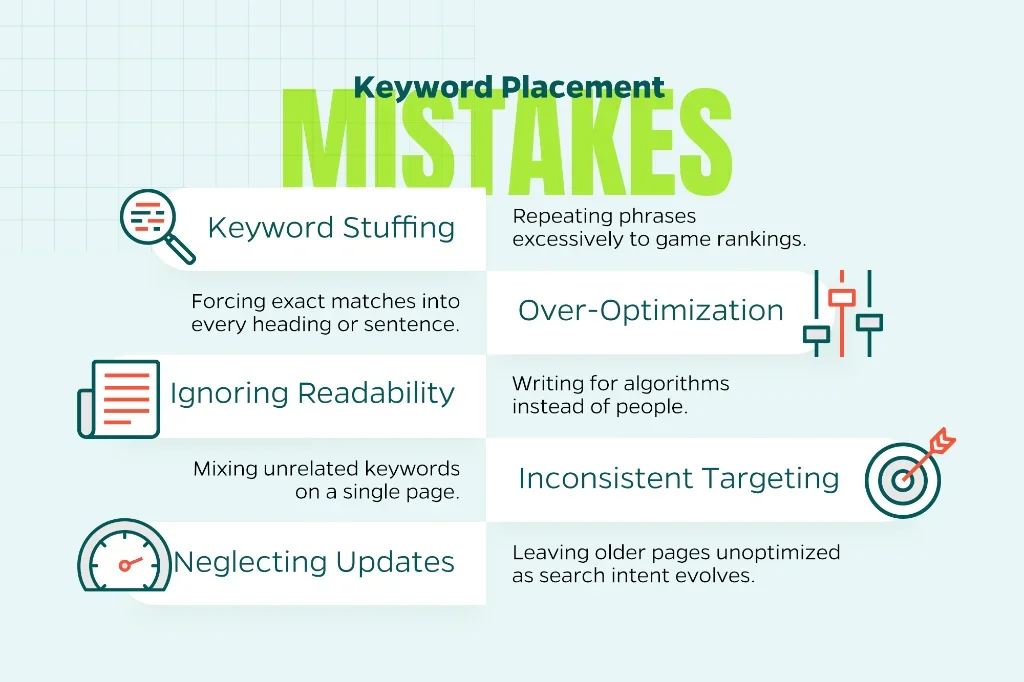
Avoiding these pitfalls protects your site from performance drops and keeps your content aligned with current best practices.
Measuring and Refining Keyword Placement
Keyword placement isn’t a set-it-and-forget-it task. Performance data should guide ongoing improvements.
Key metrics to monitor include:
- Organic rankings for primary and secondary keywords
- Click-through rates from search results
- Engagement metrics like time on page and bounce rate
- Conversion performance where applicable
If a page ranks well but gets few clicks, revisiting title tags and meta descriptions can help. If engagement is low despite decent traffic, your body content and heading structure may need adjustment.
Final Thoughts
Keyword placement is about clarity, not manipulation. When keywords are positioned thoughtfully, they help search engines understand your content while helping users quickly find what they need.
Need help optimizing your content for search? Contact Straight North to learn how our SEO services can improve your keyword strategy and drive measurable results.